


The AMD Ryzen Threadripper 3000 Series CPU Lineup
Packing tons of cores and double the threads, the first two installments of Ryzen Threadripper series left us all in shock and awe. The first generation Ryzen Threadripper series offered us an insane 16 core and 32 thread beast in the form of the Ryzen Threadripper 1950X, something that the HEDT market had never seen before, prompting Intel to release their own answer in the form of the Core i9-7980XE, an 18 core and 36 thread chip. But Intel's first spot in the core count race was short-lived with AMD releasing their second installment of the Threadripper lineup, featuring 32 cores and 64 threads on the Ryzen Threadripper 2990WX processor.

Once again, Intel tried to offer their best but couldn't keep up with the core count that AMD managed to deliver. Intel only managed to offer a 28 core and 56 thread chip known as the Xeon W-3175X. But once again, AMD not only won the core count war but the pricing war too since their 32 core chip was priced $1000 less compared to Intel's flagship part.
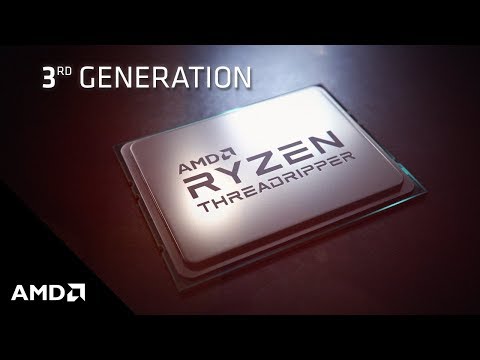
Now, AMD has officially announced the 3rd installment of the Ryzen Threadripper family. Once again, AMD is uplifting the performance of their Threadripper parts by utilizing 7nm Zen 2 cores which offer up to 15% better IPC than Zen+ and come in a unique chiplet architecture which was first introduced on AMD's 2nd Generation EPYC lineup known as Rome. The two parts launching today are the Ryzen Threadripper 3970X and the 3960X. For this review, we will be testing the AMD Ryzen Threadripper 3970X with the ASRock TRX40 Taichi motherboard.
AMD Threadripper vs Intel Core - More Than Just Core Wars
Before I start this review, let's take a quick recap of the core wars that's been going on since the beginning of 2017 between AMD and Intel. Prior to 2017, the industry was used to the annual 4 core mainstream and 8/10 core high-end desktop refreshes that Intel produced. Intel was also on top of the game since AMD's Bulldozer (and its various iterations) didn't pose major threat & Zen was still under-development.
So how did Intel go from the leader of the HEDT space to being crushed by AMD's mainstream chip platform? You are expecting me to blame Intel's reliance on 14nm for this issue and while it is a factor, it isn't as big as some other bad decisions that went into Intel's HEDT lineup starting with the 7th Generation Core-X series. You see, back in 2017, there was no AMD HEDT lineup and Intel was considered to be the bleeding-edge HEDT offerer in the market space. While AMD had started pushing Intel to offer more cores in the mainstream segment (e.g. four cores flagship on Kaby Lake vs 6 cores flagship on Coffee Lake), they weren't expecting or rightly put, weren't in the mood to innovate their HEDT lineup any time soon.
Then 1st Gen Threadripper happened and we all know how AMD caught Intel with their pants off. The problem wasn't that Intel didn't have the platform to compete against AMD, it's more to do with their laziness on how they wanted to continue offering 10 cores / 20 thread chips as flagship HEDT parts for years to come. You see, Intel had the technology to offer 12 cores and 24 threads back in their Ivy Bridge generation, 18 cores and 36 threads in the Haswell generation & same in the Skylake generation. However, knowing they dominated the market, the didn't see the reason to innovate the HEDT space anytime soon.
HEDT & Mainstream Segment Core/Thread Count Race:
| Year | 2016 | 2017 | 2018 | 2019 | 2020 |
|---|---|---|---|---|---|
| AMD HEDT | N/A | 16 / 32 | 32 / 64 | 32 / 64 | 64 / 128 |
| Intel HEDT | 10 / 20 | 18 / 36 | 18 / 36 | 18 / 36 28 / 56 (Xeon W-3175X) | 18 / 36 28 / 56 (Xeon W-3175X) |
| AMD Mainstream | 8 / 8 | 8 / 16 | 8 / 16 | 16 / 32 | 16 /32 |
| Intel Mainstream | 4/8 | 6 / 12 | 8 / 16 | 8 / 16 | 10 / 20 |
So what do you when your darkest nightmare comes true? Rush to rebadge Xeon parts which could've been done early on and don't give partners enough time to evaluate your new chips on their products, resulting in a botched launch. Intel's first Core-X lineup was a mess and that is why it took Intel 3 generations just to fix the problems of their first X-series lineup.
The 3 years of Threadrippers have also been building up to this moment. While Intel was fixing their X-series lineup, AMD was gaining at both fronts, the market and mind share. You have to sacrifice margins for market share gains and word of mouth to spread before you start hiking up prices for higher profits.

AMD's Threadrippers are repurposed EPYC chips just like how Intel's Core X processors are repurposed Xeon chips that couldn't pass the server-level qualifications. This was another factor which if Intel could've considered earlier on wouldn't get their HEDT lineup into so much trouble. AMD was willing to cut the profit margins offering the same core counts of their EPYC lineup on the Threadripper parts. Intel might have downplayed the fact that in the coming years, AMD's Ryzen Threadripper core count would match the EPYC lineup. This is a superb game played by AMD where their first-generation Threadripper had half the core count of EPYC Naples and only the second generation that launched a year later offered the full 32 cores. This is changing with 3rd generation as the Threadripper 3990X will be carrying 64 cores, same as the top-end EPYC chip.
AMD is also taking Intel's position, becoming the leader of the HEDT market but at the same time, not let this platform become stagnant. AMD is aware that eventually, Intel would have a response which is the next topic I want to shed light on so they want to stay on the high-ground whenever Intel tackles them but also try to maximize profits when there is no competition which we can get a slight hint of from the 3rd Gen Threadripper prices. AMD is easing up on the prices and only Intel themselves is to blame.
AMD is pushing the boundaries once again, making sure that the new Threadripper lineup is fully accompanied by an industry-leading platform. The new platform for Threadripper is called TRX40 and it is exclusively designed for 3rd Gen Threadripper processors and beyond.
The TRX40 HEDT platform would feature quad-channel memory, UDIMM memory support with 2 DIMMs per channel and up to 256 GB (EEC) of capacity. There would also be support for 64 Gen 4 PCIe lanes with 16 lanes switchable with the SATA interface. There also seems to be info regarding TDPs and we can also notice the segmentation here too. For the full details on each respective TRX40 motherboard, you can check out our roundup over here!

Once again, AMD's HEDT platform is made in a way that it can cater not only to HEDT consumers but also to the workstation community. In terms of features, the platform now supports up to 64 cores and 128 threads and there's no doubt that we will get more cores and threads on the same socket and platform in the future with future iterations of the Zen core. It can support chips with up to 280W TDP and can deliver full 72 PCIe Gen 4 lanes to users. The CPU itself also features 4x bandwidth versus the 2nd Generation Threadripper processors which had to communicate with the off-chip X399 chip.
AMD Ryzen Threadripper Generation Comparison:
| Family Name | AMD Threadripper Next | AMD Threadripper 9000 | AMD Threadripper 7000 | AMD Threadripper 5000 | AMD Threadripper 3000 | AMD Threadripper 2000 | AMD Threadripper 1000 |
|---|---|---|---|---|---|---|---|
| Codename | Mustang Peak | Shimada Peak | Storm Peak | Chagall | Castle Peak | Coflax | Whitehaven |
| CPU Architecture | Zen 6 | Zen 5 | Zen 4 | Zen 3 | Zen 2 | Zen+ | Zen 1 |
| Process Node | 2nm | 4nm | 5nm | 7nm | 7nm | 12nm | 14nm |
| Max CPU Cores | TBD | 96 | 96 | 64 | 64 | 32 | 16 |
| Max CPU Threads | TBD | 192 | 192 | 128 | 128 | 64 | 32 |
| PCIe Support | PCIe Gen 6.0 | PCIe Gen 5.0 | PCIe Gen 5.0 | PCIe Gen 4.0 | PCIe Gen 4.0 | PCIe Gen 3.0 | PCIe Gen 3.0 |
| Max PCIe Lanes | TBD | 128 | 128 | 72 | 128 | 64 | 64 |
| Max L2 Cache | TBD | 96 MB | 96 MB | 32 MB | 32 MB | 16 MB | 8 MB |
| Max L3 Cache | TBD | 384 MB | 384 MB | 256 MB | 256 MB | 64 MB | 32 MB |
| Max TDP | TBD | 350W | 350W | 280W | 280W | 250W | 180W |
| Socket | sTR6 | sTR5 | sTR5 | sTRX4 | sTRX4 | SP3r2 | SP3r2 |
| Chipset | TBD | WRX90, TRX50 | WRX90, TRX50 | TRX40, TRX80, WRX80 | TRX40, TRX80, WRX80 | X399 | X399 |
| Launch | 2027? | 2025 | 2023 | 2022 | 2019 | 2018 | 2017 |
The HEDT sTRX4 (LGA 4094) Socket - 3rd Gen Ryzen Threadripper Support
With the TRX40 platform, AMD is also slightly revising their socket. The TR4 socket has now been changed to the sTRX4 socket. The packaging of both sockets is the same but there are some major changes made to the pin layout. The pin count is still 4094 for the socket itself for the SP3 socket but the revised naming should be considered here. The sTRX4 SP3 socket has more pins enabled than the TR4 SP3 socket.

In the following pictures, you can see the difference between the TR4 and sTRX4 socket. Do note that AMD has implemented ID pin recognition to match compatible CPUs with their socket and in this case, the sTRX4 socket would only support 3rd Gen Threadrippers. The socket will prevent boot on any older processor by recognizing the pin configuration.
AMD sTRX4 SP3 Socket For 3rd Gen Threadripper:

AMD TR4 SP3 Socket For 1st/2nd Gen Threadripper:

Cooler Compatibility With The sTRX4 Socket
Since the socket hasn't changed, all coolers that were previously compatible with Threadripper CPUs would run fine with the 3rd Generation Threadripper chips. Despite that, new coolers are going to be available by various manufacturers since the new series have TDPs of up to 280W. Those require better heat transfer and cooling solutions and I will be testing my sample chip with a range of air and water cooling solutions.

AMD has officially announced the 3rd installment of the Ryzen Threadripper family. Once again, AMD is lifting up the performance of their Threadripper parts by utilizing 7nm Zen 2 cores which offer up to 15% better IPC than Zen+ and come in a unique chiplet architecture which was first introduced on AMD's 2nd Generation EPYC lineup known as Rome. The two parts launching today are the Ryzen Threadripper 3970X and the 3960X, their specifications are detailed below.

AMD has made significant changes to their CPU architecture which help deliver twice the throughput of their first-generation Zen architecture. The major points include an entirely redesigned execution pipeline, major floating-point advances that doubled the floating-point registers to 256-bit and double bandwidth for load/store units. One of the key upgrades for Zen 2 is the doubling of the core density which means we are now looking at 2x the core count for each core complex (CCX).
- Improved Execution Pipeline
- Doubled Floating Point (256-bit) and Load/Store (Doubled Bandwidth)
- Doubled Core Density
- Half the Energy Per Operation
- Improved Branch Prediction
- Better Instruction Pre-Fetching
- Re-Optimized Instruction Cache
- Larger Op Cache
- Increased Dispatch / Retire Bandwidth
- Maintaining High Throughput for All Modes

Each Threadripper processor is made up of 4 Zen 2 dies which are interconnected through the 2nd Gen Infinity Fabric with an I/O die that acts as a central hub of the processor. Each processor has a total of 23.54 billion transistors on the entire package, which makes it one of the most densely packed chip designs ever developed.
AMD Ryzen Threadripper 3970X - 32 Zen 2 Cores, 64 Threads For $1999 US
The AMD Ryzen Threadripper 3970X is the most powerful high-end consumer desktop processor of 2019. It will be featuring 32 cores and 64 threads along with 128 MB of L3 cache. The processor will be clocked at 3.7 GHz base and 4.5 GHz boost speeds. The processor would also feature 88 Gen 4 PCIe lanes coming right from the massive PCH die which we talked about in the previous month & would be supported by the sTRX4 socket which is featured on the latest TRX40 motherboard lineup from various manufacturers. The processor would feature a TDP of 280W and would be launching at a price of $1999 US on 25th November.
While the AMD Ryzen Threadripper 3970X has the same core count as the Threadripper 2990WX, the new CPU would be based on the 7nm Zen 2 core architecture and is expected to deliver major gains, not only in single-core optimized workloads but multi-threaded applications. The processor is a beast of its own with lots of power stacked in one chip which truly makes for a semi-pro PC / workstation build that many mega-tasking enthusiasts should be excited about. The AMD Ryzen Threadripper 3970X offers significantly better performance than the competition across multiple content creations and compute-intensive workloads, including:
- Up to 90% faster performance in Cinebench R20 nT
- Up to 47% more performance in Adobe Premiere
- Up to 49% more performance in V-Ray
- Up to 43% more performance in Chromium Release 78 Compile
- Up to 36% more performance in Unreal Engine


AMD Ryzen Threadripper 3960X - 24 Zen 2 Cores, 48 Threads For $1399 US
The AMD Ryzen Threadripper 3960X is the second of the two chips that are part of the initial Ryzen Threadripper CPU lineup. The processor would feature 24 cores and 48 threads. The chip would feature 128 MB of cache, 88 PCIe Gen 4.0 lanes and a TDP of 280W, just like the 3970X. Its clock speeds are rated at 3.8 GHz base and 4.5 GHz boost. The Ryzen Threadripper 3960X would replace the Ryzen Threadripper 2970WX at a price of $1399 US which is $100 US more than the former chip but offers a lot more performance in single and multi-threaded applications.
The Threadripper 3960X would also hit retail stores on 25th November and would be a decent chip for those who are looking to enter the pro enthusiast space without touching $2K for a processor alone. The processor also seems to be perfect for those building a cheaper workstation solution as the same number of PCIe lanes and massive I/O of the other Threadripper parts is still available on it.
AMD Ryzen Threadripper 3990X - The 64 Core / 128 Thread Daddy of HEDT Chips
There's also one more chip, the daddy of all HEDT CPUs made to date. Meet the AMD Ryzen Threadripper 3990X, the pinnacle of high-end desktop processors. Featuring a gargantuan 64 cores and 128 threads, this chip is a beast. The core and thread counts are simply astonishing unlike anything that we have seen before on the HEDT platform but AMD has pushed the HEDT hard and they are indeed bringing this supermassive chip to their TRX40 platform.

Unlike the rest of the Ryzen Threadripper 3000 processors, the 3990X has a proper announcement and launch planned in January 2020.
AMD 3rd Gen Ryzen Threadripper Processor SKUs
| CPU Name | CPU Cores | CPU Thread | CPU Predecessor | Base Clock | Boost Clock | Cache | TDP | Price | Retail Launch |
|---|---|---|---|---|---|---|---|---|---|
| AMD Ryzen Threadripper 3990X/WX | 64 Core | 128 Thread | AMD Ryzen Threadripper 2990WX (32 Core / 64 Thread) | 2.9 GHz | 4.3 GHz | 288 MB | 280W | $3990 US | 7th February 2020 |
| AMD Ryzen Threadripper 3980X/WX | 48 Core | 96 Thread | N/A | TBD | TBD | TBD | 280W | $2499-$2999 US | 2020 |
| AMD Ryzen Threadripper 3970X/WX | 32 Core | 64 Thread | AMD Ryzen Threadripper 2970WX (24 Core / 48 Thread) | 3.7 GHz | 4.5 GHz | 144 MB | 280W | $1999 | 25th November 2019 |
| AMD Ryzen Threadripper 3960X | 24 Core | 48 Thread | N/A | 3.8 GHz | 4.5 GHz | 144 MB | 280W | $1399 | 25th November 2019 |
Both AMD Ryzen Threadripper 3970X and 3960X would come in brand new packaging, featuring a large cardboard package inside which a plastic container would be housing the processor along with the sTRX4 socket key. You can check out the packaging below:


AMD Game Mode and Creator Mode For 3rd Gen Threadripper CPUs Explained
Once again, like 1st and 2nd Gen Ryzen Threadripper CPUs, the 3rd Gen series will feature support in Ryzen Master, allowing users to switch between Game Mode or Creator Mode. There will also be options to switch between legacy mode which will disable the extra threads on the processors to avoid incompatibility in legacy or older applications. Both can be set through the Ryzen Master configuration utility which has now been updated to support 2nd Generation Ryzen Threadripper processors. The utility also provides other nifty features and configuration tool which can be used by overclockers to fine-tune their chips.
Another thing worth noting is that in-game mode, Ryzen Threadripper processors will optimize to run with 8 cores, 16 threads. That means only 2 CCX or 1 die would be enabled, reducing latency. With memory access modes, users can select between UMA (maximum memory bandwidth) and NUMA (lowest latency) modes. While on the topic of Ryzen Master, it should be pointed out that a new updated version will be released on launch day, 13th August, offering more fine-tuning and control over the HEDT processors.

So what the Threadripper profiles do is that they optimize the chip for the specified workloads. For instance, the gaming mode will enable Local memory access mode and turn the compatibility mode to legacy. This will help reduce memory and core-to-core latency and overcome the thread count limitation in some of the legacy games which can endure bugs and issues with modern multi-core CPUs.
The creator mode, on the other hand, turns the memory access to the distributed mode and disables the legacy mode. This maximizes threads and total memory bandwidth for an unrestrained amount of CPU performance and will be the default profile for Threadripper processors.

The ASRock TRX40 motherboard lineup includes two motherboards, the TRX40 Creator and the TRX40 Taichi. Both motherboards have been said to be very competitive in terms of features and pricing compared to other AIB's TRX40 products. The TRX40 Taichi is the flagship of the two boards with a focus primarily towards enthusiasts while the TRX40 Creator is more focused on the workstation and prosumer audience who want the best-in-class pro-grade features.
The ASRock TRX40 Taichi features the latest Taichi design that we saw on the X570 Taichi. The board comes in a black and silver color scheme with gear logos and aesthetics spread across various heatsinks and I/O cover. Just as you can expect, the ASRock TRX40 Taichi rocks a very premium design and has an abundance of features packed on it. The motherboard has a 16 phase (Intersil Digital) PWM which is rounded by the top of the line components such as premium 90A Dr. MOS power chokes, premium memory alloy chokes, Nichicon 12K black capacitors, and a matte back 8-layer PCB with 2oz copper design.

The CPU socket is powered by dual 8-pin connectors and the whole VRM area is cooled off by one large XXL aluminum alloy heatsink that is accompanied by dual cooling fans. This along with the added Heatpipe transfer heat from the VRM area to the heatsink near the I/O which absorbs most of the heat. There are eight DDR4 DIMM slots that can support up to 256 GB of capacity with speeds of up to 4666 MHz (OC+).
The motherboard also comes with three PCIe 4.0 x16 slots (x16, x16, x16 electrical) and a single PCIe 4.0 x1 slot. The three full-length x16 slots are reinforced by steel shielding. There are two Hyper M.2 slots and 8 SATA III ports for storage devices included on the motherboard. Other than that, all M.2 slots can be seen hidden beneath the front motherboard cover. Additional ports include a USB 3.2 Gen 2 Type-C front-panel connector, power on/off switches, a reset switch, DEBUG LED and a couple of USB 3.0 front panel headers.
The interesting thing about this board is that it comes with the Hyper Quad M.2 AIC which allows for four additional M.2 devices to be added on an external card which comes with its own active cooling. There's also active cooling on the PCH heatsink which also includes the fancy gear design seen on the new Taichi boards. The I/O on the motherboard includes the following:
ASRock TRX40 Taichi Motherboard Features:
- - 2 x Antenna Ports (on I/O Panel Shield)
- - 1 x PS/2 Mouse/Keyboard Port
- - 1 x Optical SPDIF Out Port
- - 2 x USB 3.2 Gen2 Type-A Ports (10 Gb/s) (Supports ESD Protection)
- - 1 x USB 3.2 Gen2x2 Type C Port (20 Gb/s) (Supports ESD Protection)
- - 4 x USB 3.2 Gen1 Ports (Supports ESD Protection)
- - 2 x RJ-45 LAN Ports with LED (Realtek 2.5G LAN / Intel Gigabit LAN / WiFi 6)
- - 1 x BIOS Flashback Button
- - HD Audio Jacks: Rear Speaker
ASRock TRX40 Taichi Motherboard Gallery:


The ASRock TRX40 Taichi comes in a large rectangular box with an easy carry handle on the top. The motherboard features black and brushed-silver aesthetics and makes full use of the Taichi gear theme to give the box a unique look.

The front side of the package features various marketing labels such as AMD Socket sTRX4, TRX40, PCI Express 4.0 Ready, Quad Channel Memory, Overclocking support, Polychrome Sync and AMD Ryzen Threadripper. The product name is also prominently mentioned on the front.
There's also a flip cover on the front which you can open to reveal the motherboard itself. There are more features listed inside such as XXL Aluminum Alloy heatsink and cooling fan, Hyper Quad M.2 Card, 16 phases power & 90A DR.MOS.

The back of the box contains all the marketing details along with product specifications. The most interesting features that are highlighted by ASRock are the Dr.MOS 90A MOSFETs for power, USB 3.2 Gen 2x2 20Gbps ports, WiFi 6 802.11ax, 2.5 Gb LAN and Hyper M.2 ports with up to 64 Gbps transfer speeds.

Within the package are two containers, one houses the motherboard while the other houses the accessories. The accessories for the ASRock TRX40 Taichi motherboard include:
- - Quick Installation Guide, Support CD
- - 4 x SATA Data Cables
- - 1 x ASRock SLI_HB_Bridge_2S Card
- - 1 x ASRock HYPER QUAD M.2 CARD
- - 1 x ASRock WiFi 2.4/5 GHz Antenna
- - 1 x ASRock Screwdriver
- - 6 x Screws for M.2 Sockets
- - 2 x Standoffs for M.2 Sockets


The most interesting accessory of them all is the Hyper Quad M.2 card. This card lets users plug in up to four M.2 SSDs which are cooled by a single fan embedded on the add-in-card. The card has a nice brushed silver body that is made out of aluminum. This shroud serves as a heatsink for the 4 M.2 drives since ASRock features thermal adhesive tape beneath the shroud to make contact with all SSDs being used. The card features its own 6-pin power connector and comes in a single-slot design.
There are also switches on the board that let you disable the M.2 ports for PCIe lane conversation. Another switch close to the fan lets you disable it entirely for quieter operation at the expense of slightly higher noise output.


Outside of the package, the motherboard can be seen in all its glory, tightly held between two pieces of foam. The ASRock TRX40 Taichi continues the tradition of offering the unique Taichi theme which we have seen on the X570 and X299 series, now coming to the latest & grandest HEDT platform of them all.

The ASRock TRX40 Taichi is a stunning motherboard and what makes it even more impressive is that it carries a flagship design in an ATX form factor unlike the rest of flagship TRX40 boards that will be going E-ATX route.

Right from the beginning, we can see that the Taichi is styled in black and silver colors. The Taichi gear theme can be seen on both front and back sides. The Taichi theme looks absolutely brilliant and eye-catching on the motherboard as well as the overall design layout which has been upped from the past Taichi variants.

The back of the motherboard carries a nice backplate which has RGB LEDs embedded on the side. They are compliant with ASRock's Polychrome Sync 2.0 technology. The heatsink is held firmly by 4 screws.
The board packs a better overall design scheme that allows for faster connectivity, memory support and storage options compared to the X399 motherboards. I have previously tested ASRock's X399 Taichi and X399M Taichi motherboards so I can see some big changes & very interesting design choices with the new TRX40 Taichi motherboard.
The board uses the sTRX4 socket to support 3rd Gen AMD Ryzen Threadripper CPUs. The socket has a plastic cover that slides in and out with ease. The AMD Ryzen Threadripper processors also slide in the socket with ease after removal of the protective cover. All TRX40 motherboards are shipped with this cover since we are talking about 4094 pins and one damaged pin can cause permanent damage to the board.

Right next to the socket are eight DDR4 DIMM slots which can support up to 256 GB (dual channel) memory. These slots are rated to support DDR4 DIMMs with frequencies all the way up to 4666 MHz (OC+) which is a huge increase from the X399 Taichi which only supported up to 3600 MHz (OC+) DIMMs.

The motherboard packs 16 ISL (Intersil Digital) 99390 phases with 90A Dr.MOS MOSFETs for Vcore which powers the socket. The board also uses a 2x copper PCB & uses higher quality components which emphasize quality over quantity, offering higher stability. There are also four phases for the memory and 2 phases for the TRX40 chipset.

The motherboard makes use of three sets of heatsinks, two featured across the CPU, memory and VRM area and one featured on the TRX40 PCH. The ones on the CPU VRMs are interconnected by a single heat pipe that runs through the large aluminum alloy finned heatsinks. Both heatsinks are colored silver and have the Taichi theme spread across them. The top-most heatsink has two fans featured vertically which blow air towards the heatsink rather than outside it, keeping it cool with air inside the chassis.


ASRock states that their EBR fan technology makes use of a better ball-bearing design which makes sure you get a longer lifetime and better airflow out of these fans. They are rated for up to 50K life-time hours.

The top I/O cover has an ASRock Taichi logo which is a nice touch to the AMD setup. The shield covers the entire I/O panel and looks great on this motherboard.

There’s no cooling mechanism involved with the cover as it’s just for visuals and mostly hollow from the inside, but it does add to the overall looks of the product and that’s its main purpose here. It also hides the cables running from the WiFi 6 M.2 card which makes its addition good.

The CPU is supplied with power through two 8 pin connectors. This will feed the CPU with up to 300W of power. AMD currently ships Ryzen Threadripper CPUs with TDPs of 280W.

Expansion slots include three PCI Express 4.0 x16 (x16/x16/x16 electrical), a single PCI Express 4.0 x1 and dual M.2 slots. The board can support 3-way multi-GPU (CrossFireX / SLI). The M.2 slots are rated to support NVMe PCIe Gen3 x4 SSD.

The M.2 slots are hidden beneath the expansion slot cover. There are two covers, the top one requires you taking off three screws which exposes the PCH heatsink while the lower heatsink requires only two screws to be taken off. The WiFI 6 card is featured in the M.2 key slot. There's thermal adhesive tape beneath the alloy covers so that SSDs underneath them would run cool.


Removing the covers also let us see the PCIe Gen 4 slots clearly which come with the latest Steel slot design. These not only make the slots more durable and solid but also increase signal stability since ASRock has featured more anchor points underneath the slots. One more thing, the single PCIe 4.0 x1 slot doesn't feature any of the said features.
There are two Hyper M.2 slots on the motherboard that operate through PCI Express 4.0 x4 link at speeds of 64 GB/s. Both slots are ideally placed. One of them is located beneath the first PCIe 4.0 x16 slot while the other is situated beneath the second PCI-e 4.0 x16 slot. The first M.2 slot can support up to 80mm SSDs while the second one can support 110mm SSDs.

The TRX40 PCH is housed beneath a large heatsink with the ASRock logo & gear theme etched on it for aesthetics. The PCH also utilizes Polychrome Sync which is fully user-customizable. There's also an active fan solution that runs all the time to keep the PCH cool.


Going more in-depth, the PCH comes with its own aluminum heatsink which extends to a second heatsink under the expansion area covers. Both heatsinks are connected by a solid metal Heatpipe which runs through them.

Storage options include eight SATA III ports rated to operate at 6 Gb/s. There are 6 SATA III ports next to the PCH heatsink while the remaining two are featured at the bottom of the board near the front panel connectors. These can support a total of 6 different storage devices at the same time.

ASRock is using a combination of Realtek ALC4050H and ALC1220 codecs on this motherboard to drive the audio. These are part of the Purity Sound 4 system which comes with Nichicon caps, PCB isolation, NE5532 headset amplifier (supports up to 600 Ohm headsets), and a 7.1 channel audio jack on the rear.

The motherboard has two onboard USB 3.2 Gen 1 headers and a single USB 3.2 Gen 2 header which can be used to connect the front panel. There are an ample amount of fans connectors including those for water pumps on liquid AIO coolers. A list of connectors available internally on the motherboard include:
- - 1 x Power LED and Speaker Header
- - 2 x RGB LED Headers
- - 2 x Addressable LED Headers
- - 1 x CPU Fan Connector (4-pin)
- - 1 x CPU/Water Pump Fan Connector (4-pin) (Smart Fan Speed Control)
- - 3 x Chassis/Water Pump Fan Connectors (4-pin) (Smart Fan Speed Control)
- - 1 x 24 pin ATX Power Connector (Hi-Density Power Connector)
- - 2 x 8 pin 12V Power Connectors (Hi-Density Power Connector)
- - 1 x Front Panel Audio Connector (15μ Gold Audio Connector)
- - 1 x USB 2.0 Header (Supports 2 USB 2.0 ports) (Supports ESD Protection)
- - 2 x USB 3.2 Gen1 Headers (Support 4 USB 3.2 Gen1 ports) (Supports ESD Protection)
- - 1 x Front Panel Type C USB 3.2 Gen2 Header (Supports ESD Protection)
- - 1 x Dr. Debug with LED
- - 1 x Power Button with LED
- - 1 x Reset Button with LED
- - 1 x Clear CMOS Button

The motherboard features a pre-mounted I/O bracket which is the industry standard nowadays. It features a nice matte black color scheme along with a Taichi logo theme. I/O on the board include:
- - 2 x Antenna Ports (on I/O Panel Shield)
- - 1 x PS/2 Mouse/Keyboard Port
- - 1 x Optical SPDIF Out Port
- - 2 x USB 3.2 Gen2 Type-A Ports (10 Gb/s) (Supports ESD Protection)
- - 1 x USB 3.2 Gen2x2 Type C Port (20 Gb/s) (Supports ESD Protection)
- - 4 x USB 3.2 Gen1 Ports (Supports ESD Protection)
- - 2 x RJ-45 LAN Ports with LED (ACT/LINK LED and SPEED LED)
- - 1 x BIOS Flashback Button
- - HD Audio Jacks: Rear Speaker / Central / Line in / Front Speaker / Microphone (Gold Audio Jacks)
ASRock TRX40 Taichi Polychrome Sync 2.0 Gallery:


For this review, I had access to the Ryzen Threadripper 3970X processor. AMD did not provide us with any equipment or processors for this review. The motherboards were sent to us directly by AIBs and the rest of the equipment was also sent to us by our partners.

ASRock TRX40 Taichi & Threadripper 3970X Test Platform:
| Processors Used | AMD Ryzen Threadripper 3970X AMD Ryzen Threadripper 2990X AMD Ryzen Threadripper 1950X Intel Core i9-10980XE Intel Core i9-7980XE Intel Core i9-9900KS AMD Ryzen 9 3900X AMD Ryzen 7 3700X |
|---|---|
| Motherboard | ASRock TRX40 Taichi |
| Memory | G.SKILL Trident Z RGB Series 32 GB (4 x 8GB) CL16 3600 MHz |
| Video Cards | MSI GeForce RTX 2080 Ti Lightning Z |
| Power Supply | ASUS ROG THOR 1200W |
| Cooling Solutions | Corsair H115i Pro AIO Liquid |
| Solid State Drive | Samsung SSD 960 EVO M.2 (512 GB) |
| BIOS Used | TRX4TC1.15 |
| OS | Windows 10 64-bit |
For overclocking, the maximum clock speeds I was able to achieve on the ASRock TRX40 Taichi were 4.2 GHz across all 32 cores and 64 threads with a fixed voltage supply of 1.305V. With the settings, we booted and stress-tested the processor for 1 hour in Prime 95 which ran stable.
3DMark Time Spy CPU Performance
3DMark Firestrike is the widely popular video card benchmark test for Windows that is designed to measure your PC’s gaming performance. While the overall benchmark is great, the utility also provides a good indication of the CPU performance.
3DMark TimeSpy CPU
Blender
Blender is the free and open source 3D creation suite. It supports the entirety of the 3D pipeline—modeling, rigging, animation, simulation, rendering, compositing and motion tracking, even video editing and game creation.
Blender 2.8
Cinebench R20
Cinebench is a real-world cross-platform test suite that evaluates your computer’s hardware capabilities. Improvements to Cinebench Release 20 reflect the overall advancements to CPU and rendering technology in recent years, providing a more accurate measurement of Cinema 4D’s ability to take advantage of multiple CPU cores and modern processor features available to the average user.
Cinebench R20
Cinebench R15
CINEBENCH is a real-world cross-platform test suite that evaluates your computer’s performance capabilities. CINEBENCH is based on MAXON’s award-winning animation software CINEMA 4D, which is used extensively by studios and production houses worldwide for 3D content creation. MAXON software has been used in blockbuster movies such as Iron Man 3, Oblivion, Life of Pi or Prometheus and many more.
Cinebench R15
Geekbench 5
Geekbench 5, the latest major upgrade to Primate Labs’ easy-to-use cross-platform benchmark, is now available for download. Geekbench 5 allows you to measure your system’s power more accurately than ever before.
Geekbench 5
HandBrake
HandBrake is a tool for converting video from nearly any format to a selection of modern, widely supported codecs.
Handbrake
PCMark 10
PCMark 10 is a complete PC benchmarking solution for Windows 10. It includes several tests that combine individual workloads covering storage, computation, image and video manipulation, web browsing and gaming. Specifically designed for the full range of PC hardware from netbooks and tablets to notebooks and desktops, PCMark 10 offers complete Windows PC performance testing for home and business use.
PCMark 10
POV-Ray
The POV-Ray package includes detailed instructions on using the ray-tracer and creating scenes. Many stunning scenes are included with POV-Ray so you can start creating images immediately when you get the package.
POV-Ray 3.7
SuperPI
Super PI is used by many overclockers to test the performance and stability of their computers. In the overclocking community, the standard program provides a benchmark for enthusiasts to compare “world record” pi calculation times and demonstrate their overclocking abilities. The program can also be used to test the stability of a certain overclock speed.
SuperPi
WinRAR
WinRAR is a powerful archive manager. It can backup your data and reduce the size of email attachments, decompresses RAR, ZIP and other files downloaded from the Internet and create new archives in RAR and ZIP file format.
Winrar 5.8
Ashes of The Singularity
Stardock's Ashes of the Singularity RTS title is a new take on the historical genre. The game incorporates several things that many pc gamers have been curious about and anxious to try for themselves such as Explicit Multi-Adapter Support and full Asynchronous Compute under DirectX 12 API. We tested the game at 1440P with 4x MSAA on Crazy Settings under DirectX 12.
Ashes of The Singularity (1440P)
Battlefield V
Battlefield V brings back the action of the World War 2 shooter genre. Using the latest Frostbite tech, the game does a good job of looking gorgeous in all ways possible. From the open-world environments to the intense and gun-blazing action, this multiplayer and single-player FPS title is one of the best looking Battlefields to date. The game was tested at max settings at 1440p.
Battlefield V (1440P)
DOOM
In 2016, Id finally released Doom. My testing wouldn’t be complete without including this title. It's a hell fest featuring fast-paced FPS action and tons of demons to kill. The latest title is based on both Vulkan and OpenGL APIs that take advantage of the latest multi-core and multi-GPU upgrades.
DOOM (1440P)
GTA V
GTA V is one handsomely optimized title for the PC audience. It's scalable across various PC configurations and delivers an impressive frame rate. Rockstar did an amazing job with the PC build of GTA V and it comes with a large array of settings that can be configured by PC gamers. We tested the title at 1440P with everything set to Ultra and 4x MSAA.
GTA V (1440P)
Mass Effect Andromeda
Being a huge fan of the Mass Effect series, I was highly anticipating the arrival of Andromeda to store shelves. Now that it’s here, I put the fastest gaming card to the test. Using Frostbite, the latest Mass Effect title looks incredibly gorgeous and the open-world settings on the different planets immerses you a lot.
Mass Effect Andromeda (1440P)
Metro Exodus
Metro Exodus continues the journey of Artyom through the nuclear wasteland of Russia and its surroundings. This time, you are set over the Metro, going through various regions and different environments. The game is one of the premier titles to feature NVIDIA’s RTX technology and does well in showcasing the ray-tracing effects in all corners. The game was tested at Ultra setting with RTX settings turned off at 1440p.
Metro Exodus (1440P)
Shadow of The Tomb Raider
Sequel to The Rise of the Tomb Raider, Shadow of The Tomb Raider is visually enhanced with an updated Foundation Engine that delivers realistic facial animations and the most gorgeous environments ever seen in a Tomb Raider Game. The game is a technical marvel and really shows the power of its graphics engine in the latest title.
Shadow of The Tomb Raider (1440P)
Sid Meir's Civilization VI
Civilization VI is the pinnacle of the series. It's featured huge, sweeping changes, and nothing was left out. Everything has found a purpose, they all work together in tandem but also have a reason to stand alone. It uses a more fleshed out engine that now supports DirectX 12 capabilities. We tested the game with every setting maxed out (4x MSAA, 4096x4096 shadow textures) at 1440P in DirectX 12.
Sid Meir's Civilization VI (1440P)
Watch Dogs 2
Watch Dogs 2 once again takes us on a hacking tour, but this time in the city of San Francisco. Using a very evolved version of the OPUS engine the developers should have a better grasp of things this go around than they did with Watch Dogs. The new engine incorporates several NVIDIA Gameworks technologies and is seen as one of the most graphics-intensive titles to launch this year. We tested the game on a mix of Ultra and high settings at 1440P (Temporal Filtering Disabled).
Watch Dogs 2 (1440P)
The Ryzen Threadripper 3000 series makes use of a chiplet design rather than a single monolithic die. All dies are connected through the infinity fabric interconnect & is used to thermally manage the load on different dies. The 3rd Gen Threadrippers also make use of a 7nm process node which leads to energy savings through higher efficiency.
The AMD 3rd Gen Ryzen Threadripper processors feature a TDP of 280W. Overclocking would lead to higher power consumption than the stock clocks & we have listed our power numbers for both in the chart below.
Power Consumption
For cooling, I used the Corsair H115i Pro AIO cooler which is fully compatible with the 3rd Gen Ryzen Threadripper lineup and sTRX4 socket. These coolers come with a larger surface area that makes full contact with the huge IHS on the Threadripper chips. This huge contact allows for better heat transfer to help cool the processor effectively. Following are the results o 3rd Generation Ryzen Threadripper CPU in thermal benchmarking:
Temperatures
The Ryzen Threadripper chips come with liquid metal thermal paste on each of the four dies that are featured on the chip interposer. This refined thermal interface offers much better heat transfer than Intel's TIM and the Indium based solder design means that all air gaps are removed and the chip itself is tightly packaged so that the IHS can fully unload the heat from the dies and pass it straight to the cooler itself.
The AMD Ryzen Threadripper 3970X is here and unlike someone else's HEDT lineup, it has a lot to offer. The Ryzen Threadripper 3970X is AMD's flagship consumer processor for 2019, it's their top performer in everything but it's also their most expensive chip of this year too. The Threadripper 3970X offers 32 cores and 64 threads just like last year's Threadripper 2990WX. The main change comes from architecture.
AMD's 3rd Gen Ryzen Threadripper processors offer a solid 15% IPC lift with their new Zen 2 cores. The Ryzen Threadripper 3970X. Clock speeds for the processor have gone significantly up with 3.7 GHz base and 4.5 GHz boost out of the box. So has the TDP which now sticks to 280W rather than 250W on the 2990WX. Another change is the cache which has now been pushed up to 144 MB for the 3970X compared to 80 MB on the 2990WX. Both processors feature the same quad-channel memory support but the newer chip is rated to support DDR4-3200 (native) and also has the PCIe Gen 4 advantage with 128 PCIe lanes on board.

Another key change is that the Ryzen Threadripper lineup is denoted as "X" series which is the enthusiast line while the "WX" series lineup was designed around workstation centric PCs. This means that while we could see WX processors later, the current X series lineup is tuned for all kinds of workloads, not just content creation.
I wish I had some nice words for Intel in this review but when it comes to performance, they are completely obliterated by the 3970X. There's not a single chip in Intel's arsenal at the moment which can take on this 32 core gargantuan from AMD. Even compared to the 2990WX, I am looking at huge performance uplifts which shouldn't be a shocker considering what we have seen AMD's Ryzen 9 3950X do to the 1950X and 2950X. In both single-threaded and multi-threaded workloads, the 3970X performs superbly against Intel's Core-X lineup. It may cost twice as much as the Core i9-10980XE but the performance is also a solid 2-3x increase over Intel's best efforts.
With that said, gaming is a department where Intel still leads but even AMD's own mainstream arsenal is closing the gap and performing superbly against Intel's mainstream parts. The AMD Ryzen Threadripper 3970X manages to outclass the Intel Core-X processors in AAA titles & even manages to come close to the likes of the mighty Core i9-9900K which is considered to be Intel's fastest gaming processor while it's content creation, rendering performance is mind-blowing. The thermal performance may require you a custom loop or a very high-end 360mm AIO liquid cooler along with a beefy power supply since the chip sips power like a beast but at the end of the day, high-end components are what makes a high-end desktop platform.
In terms of pricing, the Ryzen Threadripper 3970X will cost you $1999 US. A proper setup to go along with including a TRX40 motherboard, at least 32 GB quad-channel memory and a high-end liquid cooler would set you off for around $1200 US with the cost break down listed below:
- ASRock TRX40 Taichi Motherboard With Quad Hyper M.2 & 2.5G Lan ($499 US @ Amazon)
- G.Skill Trident Z Neo 32 GB (4 x 8GB) Quad Channel DDR4-3800 Kit ($558.61 US @ Amazon)
- DeepCool Castle 360EX Anti-Leak AIO Liquid Cooler TR4/AM4 ($156.06 US @ Amazon)
All three components combined, you are looking at at least $3200 US for the CPU, Motherboard, Memory, and cooling when building a 3rd Gen Ryzen Threadripper setup with 32 cores and 64 threads. The graphics card, storage, casing, fan costs are all extra. But even considering the $3200 US, that is pretty decent for a 32 core & 64 core thread PC with performance that even most of the workstation setups won't have.

Plus with boards like the ASRock TRX40 Taichi which offers extremely good build quality and tons of feature for $499 US, you can't go wrong with the purchase. ASRock upped the game, driving Ryzen Threadripper CPUs on their new and improved 16 phase 90A power delivery system which is out-fitted with a beefy cooling system that keeps the VRMs at a cool 54C which is very impressive which you will see in our comparison reviews with other TRX40 motherboards which we will be publishing in the coming days. The ASRock TRX40 Taichi is simply the board of choice and has everything you would ever want on a HEDT motherboard.
Today, Intel and AMD launched their latest HEDT CPUs. Intel had to move their embargo time ahead just so their new 10th Gen X-series lineup can be in the spotlight before becoming entirely irrelevant in the HEDT space. After 6 hours of fame or I'd rather say shame, AMD has released their answer. The mighty Threadripper is now the undisputed king of the HEDT market, it offers such a huge performance increase that every benchmark I ran had me in shock and awe! The 3970X is the king and currently the fastest x86 processor for consumers on the planet. If you are a streamer, a content creator, a workstation enthusiast, a high-end gamer, a storage freak, a networking master-mind, hell, even if you are none of those and just want to get the best processor that 2019 has to offer, look no further than the AMD Ryzen Threadripper 3970X. In simple words "JUST BUY IT!"

Contents


About the author: A Software Engineer by training and a PC enthusiast by passion, Hassan Mujtaba serves as Wccftech's Senior Editor for hardware section. With years of experience in the industry, he specializes in deep-dive technical analysis of next-generation CPU and GPU architectures, motherboards, and cooling solutions. His work involves not only breaking news on upcoming technologies but also extensive hands-on reviews and benchmarking.
Follow Wccftech on Google to get more of our news coverage in your feeds.


