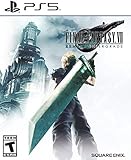
Like the first two entries in the trilogy, Final Fantasy VII Remake Part 3 will be powered by Unreal Engine 4. While this choice was somewhat expected, especially to get the game out in a reasonable amount of time, some have been disappointed by this confirmation, fearing that the third and final installment of the series will be less advanced than other games powered by Unreal Engine 5.
According to the trilogy's director Naoki Hamaguchi, this will not be true. Quite the contrary, actually: Final Fantasy VII Remake Part 3 will be a better game precisely because it uses Unreal Engine 4.
Speaking with Automaton, Hamaguchi-san commented on how the confirmation of the game using Unreal Engine 4 became a hot topic of discussion. "But I think most people aren’t necessarily familiar with the actual differences between Unreal Engine 4 and Unreal Engine 5," he said.
"Around the time we began developing Final Fantasy VII Rebirth, Unreal Engine 5 was just entering its pre-launch phase. What makes Unreal Engine 5 groundbreaking compared to Unreal Engine 4 are two features: Lumen, its lighting system, and Nanite, which allows you to portray dense graphical detail," Hamaguchi-san said in regards to the perception that a higher version number means something is more advanced. While these represent the current trends in graphics pipelines, tying the game's development to the Unreal Engine 5 roadmap may have risked slowing down the creation of the game.
As such, "we decided early on in development of FFVII Rebirth to stick with Unreal Engine 4. We’re using a graphics pipeline built in-house, which also makes optimization and porting to various hardware more straightforward," Hamaguchi-san said.
Having such an established pipeline following the development of Final Fantasy VII Remake and Final Fantasy VII Rebirth, "rather than rebuilding our pipeline from scratch in Unreal Engine 5, it’s far more efficient for us to use Unreal Engine 4," the series director said. "With all of this in mind, we judged that continuing with Unreal Engine 4 would definitely lead to a better third installment for our customers."
Considering how Final Fantasy VII Rebirth built upon pretty much every visual and gameplay feature of its predecessor, it's not surprising to learn that the development team is using the same approach for Final Fantasy VII Remake Part 3. The experience with Final Fantasy VII Rebirth is definitely going to help the studio with the Nintendo Switch 2 and Xbox Series S versions of the game as well, which will target 30 FPS whenever possible.


About the author: Francesco De Meo has been covering video games and technology since 2012, starting his career at small outlets like Gamersyndrome and GeekSnack. After joining Wccftech gaming section in 2015, he quickly expanded his video gaming coverage with in-depth reporting, interviews with iconic industry figures such as Grasshopper Manufacture founder and No More Heroes creator Goichi "Suda51" Suda, Resident Evil series creator Shinji Mikami, Team NINJA's president and Nioh series director Fumihiko Yasuda, and Silent Hill creator Keiichiro Toyama, reviews and on-the-ground coverage of major industry events such as Gamescom and E3. When he's not reporting or reviewing, Francesco can be found playing the genres he loves most, spending time with his six cats, reading, writing music, playing guitar and drumming for his progressive rock band.
Follow Wccftech on Google to get more of our news coverage in your feeds.