


The Unreal Engine 5 promises to be a real game-changer in terms of visuals, and HD remasters of older games powered by it will likely look amazing, as shown by a new video shared online this week.
Greg Coulthard shared on his YouTube channel a stunning recreation of The Elder Scrolls IV: Oblivion Imperial City made with the Unreal Engine 4. All assets have been take from the original game, and have Nanite implemented, with the exception of cobblestone, sidewalk and roof textures.
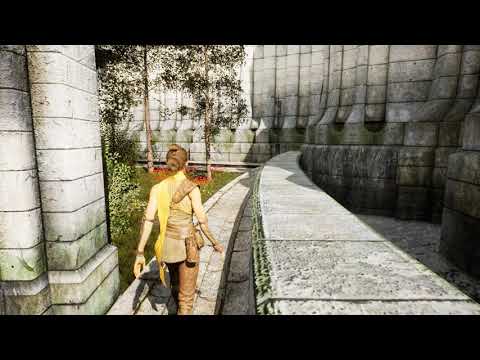
All assets from the original Oblivion game. All assets are Nanite except for the outer walls and the banners (2-sided materials). Cobblestone, sidewalk and roof texture normals cranked up with Crazy Bump. Rendered on a 1660GTX 6Gb, Intel Core I7 4770K, 24Gb RAM.
The Unreal Engine 5 is sure to change how games will look thanks to features like the already mentioned Nanite and Lumen, a fully dynamic global illumination solution.
Nanite
Nanite is a virtualized micropolygon geometry system that enables you to create games with massive amounts of geometric detail, eliminating time-consuming and tedious work such as baking details to normal maps or manually authoring LODs.
Imagine directly importing in Unreal Engine 5 film-quality source art comprised of millions of polygons—anything from ZBrush sculpts to photogrammetry scans—and placing them millions of times, all while maintaining a real-time frame rate, and without any noticeable loss of fidelity. Impossible? Not any more!
Lumen
Next up is Lumen, a fully dynamic global illumination solution. With Lumen, you can create dynamic, believable scenes where indirect lighting adapts on the fly to changes to direct lighting or geometry—for example, changing the sun’s angle with the time of day, turning on a flashlight, or opening an exterior door.
With Lumen, you no longer have to author lightmap UVs, wait for lightmaps to bake, or place reflection captures; you can simply create and edit lights inside the Unreal Editor and see the same final lighting as when the game is run on console.
More information on the Unreal Engine 5 can be found on the engine's Official Website.


About the author: Francesco De Meo has been covering video games and technology since 2012, starting his career at small outlets like Gamersyndrome and GeekSnack. After joining Wccftech gaming section in 2015, he quickly expanded his video gaming coverage with in-depth reporting, interviews with iconic industry figures such as Grasshopper Manufacture founder and No More Heroes creator Goichi "Suda51" Suda, Resident Evil series creator Shinji Mikami, Team NINJA's president and Nioh series director Fumihiko Yasuda, and Silent Hill creator Keiichiro Toyama, reviews and on-the-ground coverage of major industry events such as Gamescom and E3. When he's not reporting or reviewing, Francesco can be found playing the genres he loves most, spending time with his six cats, reading, writing music, playing guitar and drumming for his progressive rock band.
Follow Wccftech on Google to get more of our news coverage in your feeds.


