


UHD 4K Gaming
Last year, NVIDIA introduced their latest Turing based GeForce RTX 20 series graphics cards, which made a complete departure from traditional GPU design and created a hybrid GPU architecture that would include a range of new technologies to power the next-generation immersive gaming experiences
The GeForce RTX 20 series was the enablement of real-time raytracing which is the holy grail of graphics and something NVIDIA took 10 years to perfect. In addition to raytracing, NVIDIA also aimed to place bets on AI which would go on to play a key role in powering features such as DLSS or Deep Learning Super Sampling.

While the GeForce RTX 20 series was generally well-received in the tech industry, the launch didn't go without a few issues. The first and foremost problem with the new cards was the heavily taxing RTX feature and a few key titles that supported it. Since the technology was new, it needed time to deliver results and it felt kind of rushed on NVIDIA's part. The second was the pricing with each tier getting a bump in price over its predecessor.

But all of that has now changed! In less than a year, NVIDIA is now bringing forth their new RTX SUPER lineup. Think of it as the original Turing lineup but supercharged with better performance & more sensible prices. The lineup includes three cards, the GeForce RTX 2080 SUPER, GeForce RTX 2070 SUPER, and GeForce RTX 2060 SUPER. Termed in our original review as what Turing should've been in the first place, the GeForce RTX SUPER is to bring more gamers over the RTX bandwagon.
NVIDIA GeForce RTX SUPER Pricing Per Segment
When it comes to prices, the NVIDIA GeForce RTX 2080 SUPER is going to retail at $699 US, the RTX 2070 SUPER is going to retail at $499 US and the RTX 2060 SUPER is going to retail at $399 US. One would ask the question that if the prices are the same as they were before, what has changed?
Well, everything aside from the prices has been upgraded. When it comes to specifications, the RTX 2080 SUPER is going to offer around 10% better performance than the Titan XP for $699 US. The RTX 2070 SUPER is said to offer 16% better performance than the RTX 2070 for $499US, putting it right under the current RTX 2080 and the RTX 2060 SUPER is said to be 15% faster than the RTX 2060 for $399 US which puts it at 1% slower than the existing RTX 2070 for a much lower price.
What happens to the existing cards? The NVIDIA GeForce RTX 2080 and GeForce RTX 2070 are entirely replaced by their SUPER equivalents so NVIDIA and their AIBs will no longer be making more of those. There might be heavy promotions and discounts on the existing stock to clear up inventory. As for the RTX 2060, it would exist because of the $349 US price point which makes it the perfect step up to RTX performance and featureset in this category. All cards below that fall in the GTX 16 series portfolio which offer the Turing architecture but exclude RTX features. Following is what the latest pricing chart for the NVIDIA GeForce lineup looks like.
NVIDIA GeForce GPU Segment/Tier Prices
| Graphics Segment | 2023-2024 | 2022-2023 | 2021-2022 | 2020-2021 | 2019-2020 | 2018-2019 | 2017-2018 | 2016-2017 | 2014-2016 |
|---|---|---|---|---|---|---|---|---|---|
| Titan Tier | GeForce RTX 4090 | GeForce RTX 4090 | GeForce RTX 3090 Ti GeForce RTX 3090 | GeForce RTX 3090 | Titan RTX (Turing) | Titan V (Volta) | Titan Xp (Pascal) | Titan X (Pascal) | Titan X (Maxwell) |
| Price | $1599 US | $1599 US | $1999 US $1499 US | $1499 US | $2499 US | $2999 US | $1199 US | $1199 US | $999 US |
| Ultra Enthusiast Tier | GeForce RTX 4080 SUPER | GeForce RTX 4080 | GeForce RTX 3080 Ti | GeForce RTX 3080 Ti | GeForce RTX 2080 Ti | GeForce RTX 2080 Ti | GeForce GTX 1080 Ti | GeForce GTX 980 Ti | GeForce GTX 980 Ti |
| Price | $999 US | $1199 US | $1199 US | $1199 US | $999 US | $999 US | $699 US | $649 US | $649 US |
| Enthusiast Tier | GeForce RTX 4070 Ti SUPER | GeForce RTX 4070 Ti | GeForce RTX 3080 12 GB | GeForce RTX 3080 10 GB | GeForce RTX 2080 SUPER | GeForce RTX 2080 | GeForce GTX 1080 | GeForce GTX 1080 | GeForce GTX 980 |
| Price | $799 US | $799 US | $799 US | $699 US | $699 US | $699 US | $549 US | $549 US | $549 US |
| High-End Tier | GeForce RTX 4070 SUPER GeForce RTX 4070 | GeForce RTX 4070 GeForce RTX 4060 Ti 16 GB | GeForce RTX 3070 Ti GeForce RTX 3070 | GeForce RTX 3070 Ti GeForce RTX 3070 | GeForce RTX 2070 SUPER | GeForce RTX 2070 | GeForce GTX 1070 | GeForce GTX 1070 | GeForce GTX 970 |
| Price | $599 $549 | $599 US $499 US | $599 $499 | $599 $499 | $499 US | $499 US | $379 US | $379 US | $329 US |
| Mainstream Tier | GeForce RTX 4060 Ti GeForce RTX 4060 | GeForce RTX 4060 Ti GeForce RTX 4060 | GeForce RTX 3060 Ti GeForce RTX 3060 12 GB | GeForce RTX 3060 Ti GeForce RTX 3060 12 GB | GeForce RTX 2060 SUPER GeForce RTX 2060 GeForce GTX 1660 Ti GeForce GTX 1660 SUPER GeForce GTX 1660 | GeForce GTX 1060 | GeForce GTX 1060 | GeForce GTX 1060 | GeForce GTX 960 |
| Price | $449 $299 | $399 US $299 US | $399 US $329 US | $399 US $329 US | $399 US $349 US $279 US $229 US $219 US | $249 US | $249 US | $249 US | $199 US |
| Entry Tier | RTX 3050 8 GB RTX 3050 6 GB | RTX 3050 | RTX 3050 | GTX 1650 SUPER GTX 1650 | GTX 1650 SUPER GTX 1650 | GTX 1050 Ti GTX 1050 | GTX 1050 Ti GTX 1050 | GTX 950 | GTX 750 Ti GTX 750 |
| Price | $229 $179 | $249 US | $249 US | $159 US $149 US | $159 US $149 US | $139 US $109 US | $139 US $109 US | $149 US | $149 US $119 US |
In addition to the specs/price update, NVIDIA's RTX technologies are being widely adopted by major game engines and APIs such as Microsoft DirectX (DXR), Vulkan, Unreal Engine, Unity and Frostbite. While there were only three RTX titles around at the launch of the RTX 20 series cards, NVIDIA claims that they have at least 13 new titles coming soon which will utilize their RTX featureset to offer real-time ray tracing. These titles include the hugely anticipated Cyberpunk 2077, DOOM Eternal, Call of Duty Modern Warfare, Watch Dogs Legion, Wolfenstein Youngblood, and Vampire: The Masquerade - Bloodlines 2. In addition to that, with the upcoming consoles confirmed to feature ray tracing, developers can also make use of the RTX technology to fine-tune future games for the GeForce RTX hardware.

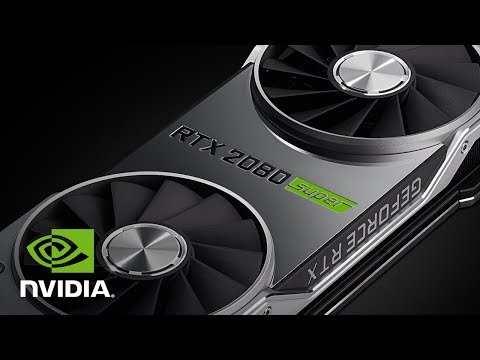
So for this review, I will be taking a look at the GeForce RTX 2080 SUPER Founders Edition. This card uses the familiar Founders Edition design we have come to know since it originally released last fall with the launch of the original RTX 2080 and RTX 2080 Ti. This model will be available directly from NVIDIA and have an MSRP of $699 making it not only a faster, but also less costly card compared to the original GeForce RTX 2080
The NVIDIA GeForce RTX SUPER Family
The NVIDIA GeForce RTX SUPER series is currently composed of three cards, the GeForce RTX 2080 SUPER, GeForce RTX 2070 SUPER, and GeForce RTX 2060 SUPER. Nothing has changed in terms of architecture and the cards feature the same 12nm FinFET process node. Only the assigned GPU config has changed on all three cards along with a new shroud design. But before we get into the visual changes, let's talk specs.

NVIDIA GeForce RTX 2080 SUPER - Full TU104 GPU, 15.5 Gbps Memory
NVIDIA’s GeForce RTX 2080 SUPER is using the TU104-450 GPU with 3072 CUDA cores, 8 GB of GDDR6 memory and would be clocked in at 15.5 Gbps along with a 256-bit bus interface. This would boost the total bandwidth to 496.1 GB/s which is just shy of that sweet 500 GB/s figures which could now easily be achieved with a slight overclock.
The core clocks would be maintained at 1650 MHz base and 1815 MHz boost. The card would have a TDP of 250W and would feature 8 Giga Rays/second worth of ray tracing horsepower. The card is available as of the 23rd of July.

In terms of performance, the GeForce RTX 2080 SUPER is said to be around 10-15% faster on average than the Titan XP which makes it a lot faster than the GTX 1080 Ti, a card that the RTX 2080 was only able to match. The card is rated to deliver 11 TFLOPs of FP32 and 11 TFLOPs of INT32 Compute power and the tensor operations are rated at 89 TOPs which are clearly faster than RTX 2080s 10.1 TFLOPs FP32 and around 81 TOPs worth of horsepower.
Those who have been saving up to buy a graphics card would find this a great high-end card compared to the original RTX 2080 or the Radeon VII.
NVIDIA GeForce RTX 2080 SUPER Official Photo Gallery:


NVIDIA GeForce RTX 2070 SUPER - The Navi Killer For $499 US
The NVIDIA GeForce RTX 2070 SUPER is the replacement for the RTX 2070 and while the RTX 2070 was not as popular as its predecessors, the GTX 1070 or the GTX 970, the RTX 2070 SUPER might actually change that. For $499 US, the existing RTX 2070 was clearly priced a bit too high. Even if it was faster than the RTX 1080 ($649 US), the price point was higher for the card to get attention from the mainstream audience who had previously seen the **70 tier cards under $400 US. The RTX 2070 SUPER doesn't change the price point but it changes the specs and now it's no longer faster than the GTX 1080, it's faster than the GTX 1080 Ti and just around the same performance of a reference RTX 2080.

In terms of specifications, the GeForce RTX 2070 SUPER is everything that the rumors have told us. The GeForce RTX 2070 SUPER would be utilizing the Turing TU104-410 GPU with 2560 CUDA Cores, 184 TMUs, and 64 ROPs. It would also feature 320 Tensor Cores and 40 RT cores. The clock speeds would be maintained at 1605 MHz base and 1770 MHz boost with the TGP (Total Graphics Power) being set at 215W. The chip will be accompanied by 8 GB of GDDR6 memory operating at 14Gbps along with a 256-bit wide bus interface, delivering a total bandwidth of 448 GB/s.
When it comes to competition, the card competes against AMD's recently launched, 7nm RDNA based Radeon RX 5700 XT which does cost $100 US less but doesn't have the RTX feature set that GeForce cards do support. In addition to that, while the Radeon RX 5700 XT was shown to be about 10% faster than the RTX 2070 on average, the RTX 2070 SUPER is about 16% faster average and up to 24% faster. It also has a maximum compute power of 9.1 TFLOPs FP32 / 9.1 TFLOPs INT 32 and 72 Tensor OPs. Another surprising fact about this card is that it has 10W lower power than the Radeon offering and the reference design offers two axial tech-based fans compared to just one on AMD's reference design. So in an all reference battle, you know who the real winner would turn out to be.
NVIDIA GeForce RTX 2070 SUPER Official Photo Gallery:


NVIDIA GeForce RTX 2060 SUPER - More VRAM, More Cores, Higher Clocks For $399
Out of all the cards, the GeForce RTX 2060 SUPER has received one of the major upgrades. The GeForce RTX 2060 SUPER would be utilizing the full Turing TU106-410 GPU die with 2176 CUDA Cores, 136 TMUs, and 64 ROPs. It would also feature 272 Tensor Cores and 32 RT cores. The clock speeds would be maintained at 1470 MHz base and 1650 MHz boost with the TGP (Total Graphics Power) being set at 175W. The chip will be accompanied by 8 GB of GDDR6 memory operating at 14Gbps along with a 256-bit wide bus interface, delivering a total bandwidth of 448 GB/s. The Vram would be the biggest upgrade over the 6 GB RTX 2060 which also featured a cut down 192-bit bus interface.

When it comes to performance, you are paying $100 US lower for the same performance as the GeForce RTX 2070. This places the card ideally against AMD's Radeon RX 5700 (non-XT) which has been priced at $349 US. The GeForce RTX 2060 SUPER is 15% faster on average than the existing RTX 2060 in 1440p.
NVIDIA GeForce RTX 2060 SUPER Official Photo Gallery:


NVIDIA GeForce RTX 20 SUPER Lineup Specifications:
| Graphics Card Name | NVIDIA GeForce RTX 2060 | NVIDIA GeForce RTX 2060 SUPER | NVIDIA GeForce RTX 2070 | NVIDIA GeForce RTX 2070 SUPER | NVIDIA GeForce RTX 2080 | NVIDIA GeForce RTX 2080 SUPER | NVIDIA GeForce RTX 2080 Ti |
|---|---|---|---|---|---|---|---|
| GPU Architecture | Turing GPU (TU106) | Turing GPU (TU106) | Turing GPU (TU106) | Turing GPU (TU104) | Turing GPU (TU104) | Turing GPU (TU104) | Turing GPU (TU102) |
| Process | 12nm FNN | 12nm FNN | 12nm FNN | 12nm FNN | 12nm FNN | 12nm FNN | 12nm FNN |
| Die Size | 445mm2 | 445mm2 | 445mm2 | 545mm2 | 545mm2 | 545mm2 | 754mm2 |
| Transistors | 10.6 Billion | 10.6 Billion | 10.6 Billion | 13.6 Billion | 13.6 Billion | 13.6 Billion | 18.6 Billion |
| CUDA Cores | 1920 Cores | 2176 Cores | 2304 Cores | 2560 Cores | 2944 Cores | 3072 Cores | 4352 Cores |
| TMUs/ROPs | 120/48 | 136/64 | 144/64 | 184/64 | 192/64 | 192/64 | 288/96 |
| GigaRays | 5 Giga Rays/s | 6 Giga Rays/s | 6 Giga Rays/s | 7 Giga Rays/s | 8 Giga Rays/s | 8 Giga Rays/s | 10 Giga Rays/s |
| Cache | 4 MB L2 Cache | 4 MB L2 Cache | 4 MB L2 Cache | 4 MB L2 Cache | 4 MB L2 Cache | 4 MB L2 Cache | 6 MB L2 Cache |
| Base Clock | 1365 MHz | 1470 MHz | 1410 MHz | 1605 MHz | 1515 MHz | 1650 MHz | 1350 MHz |
| Boost Clock | 1680 MHz | 1650 MHz | 1620 MHz 1710 MHz OC | 1770 MHz | 1710 MHz 1800 MHz OC | 1815 MHz | 1545 MHz 1635 MHz OC |
| Compute | 6.5 TFLOPs | 7.5 TFLOPs | 7.5 TFLOPs | 9.1 TFLOPs | 10.1 TFLOPs | 11.1 TFLOPs | 13.4 TFLOPs |
| Memory | Up To 6 GB GDDR6 | Up To 8 GB GDDR6 | Up To 8 GB GDDR6 | Up To 8 GB GDDR6 | Up To 8 GB GDDR6 | Up To 8 GB GDDR6 | Up To 11 GB GDDR6 |
| Memory Speed | 14.00 Gbps | 14.00 Gbps | 14.00 Gbps | 14.00 Gbps | 14.00 Gbps | 15.50 Gbps | 14.00 Gbps |
| Memory Interface | 192-bit | 256-bit | 256-bit | 256-bit | 256-bit | 256-bit | 352-bit |
| Memory Bandwidth | 336 GB/s | 448 GB/s | 448 GB/s | 448 GB/s | 448 GB/s | 496 GB/s | 616 GB/s |
| Power Connectors | 8 Pin | 8 Pin | 8 Pin | 8+6 Pin | 8+8 Pin | 8+8 Pin | 8+8 Pin |
| TDP | 160W | 175W | 185W (Founders) 175W (Reference) | 215W | 225W (Founders) 215W (Reference) | 250W | 260W (Founders) 250W (Reference) |
| Starting Price | $349 US | $399 US | $499 US | $499 US | $699 US | $699 US | $999 US |
| Price (Founders Edition) | $349 US | $399 US | $599 US | $499 US | $699 US | $699 US | $1,199 US |
| Launch | January 2019 | July 2019 | October 2018 | July 2019 | September 2018 | July 2019 | September 2018 |
In case you want to read our full NVIDIA Turing GPU architecture deep dive and GeForce RTX 2080 & GeForce RTX 2080 Founders Edition review, head over to this link.
NVIDIA GeForce RTX 2080 SUPER ($699 USD) – The High-End GeForce Turing Graphics Card
The NVIDIA GeForce RTX 2080 features the full TU104 GPU core which comprises of 3072 CUDA cores. NVIDIA’s 12nm FinFET architecture allows higher core count while retaining faster clock speeds which we have already seen on Pascal cards. The chip houses 13.6 Billion transistors which are a nice jump compared to the 7.2 billion transistors on the Pascal GP104 GPU.
The card delivers much higher performance due to enhanced core design that adds incremental IPC gains. The actual clock speeds are maintained at an increased 1650 MHz base and 1825 MHz boost. The chip features 8 GB of GDDR6 (next-gen) memory featured across a 256-bit bus and clocked at a blistering 15.5 GB/s. This leads to a total bandwidth of 496.1 GB/s.
Coupled with a very smooth power delivery system to avoid leakage, the chip is one of the most efficient GPU architecture ever designed for gamers. The display outputs for the card include 3 Display Port 1.4 (4K @ 120 Hz), 1 HDMI 2.0b (4K @ 60 Hz) and USB Type-C connector for the Virtual link which means that it is capable to support all next-gen displays with new standards. Power is fed through an 8 and 6 pin connector configuration.


When it comes to the cooler design, NVIDIA took a major departure from its blower styled cooler from previous reference designs and going for a strong dual-fan cooling system that offers better cooling performance and acoustics, and they have stuck with that cooler for the updated SUPER lineup as well. The cooler comprises of dual rotatory fans that push cool air towards a large heatsink block that is made up of several aluminum fins and interconnects via heat pipe technology. The cooler has a high-performance vapor chamber underneath the hood which uses a copper base to effectively dissipate heat from the GPU and surroundings such as the VRAM.


All of this is packed beneath an elegant looking cooler that doesn’t use the same design pattern as the GeForce 10 series founders edition cards. Those went with a more polygonal texture but this is more of a plain design featuring an aluminum shroud with a mirror finish in the center.
The RTX logo is seen on the side and has LEDs to glow when the card is operational. The shroud engulfs the entire card, leading from the top and even the back which acts as a backplate and looks very neat. In addition to the cooler, the RTX 20 series cards rock a single NVLINK connector, capable of offering dual way multi-GPU functionality. The RTX 2080 cards will operate at (x8/x8) mode.


| RTX 2080 Founders Edition | RTX 2080 SUPER Founders Edition | |
|---|---|---|
| Streaming Multiprocessors | 46 | 48 |
| Cuda Cores | 2944 | 3072 |
| Boost Clock | 1800 | 1825 |
| Base Clock | 1515 | 1650 |
| Memory Speed | 14Gbps | 15.5Gbps |
| Memory Capacity | 8GB GDDR6 | 8GB GDDR6 |
| Memory Bandwidth | 448GB/s | 496.1GB/s |
| Graphics Card Power | 225w | 250w |
All of the testings were done on our Intel Z370 test bench powered by a 5GHz Core i9-9900K. We ran all tests involving DX11 through 3 passes and averaged the results of all metrics to come to the final numbers. For DX12 and Vulkan we used the latest release of OCAT at the time and ran the resulting file through our algorithm that extracts the metrics for measurement.
The results are presented as Average FPS that represents where the average frame rate fell over the course of the test, 1% Low which represents the lowest 1% of frames, and then the .1 Percent Low represents the bottom .1% frames. These metrics give a better understanding of overall performance rather than representing the absolute minimum frame rate as that could potentially be a random outlier, but know that the .1% can still be affected by asset loading during runs.

Test System
| Components | Z370 |
|---|---|
| CPU | Intel Core i9-9900k @ 5GHz |
| Memory | 16GB G.Skill Trident Z DDR4 3200 |
| Motherboard | EVGA Z370 Classified K |
| Storage | Kingston KC2000 1TB NVMe SSD |
| PSU | Cooler Master V1200 Platinum |
| Windows Version | 1903 with latest security patches |
Firestrike Extreme
Firestrike is running the DX11 API and is still a good measure of GPU scaling performance, in this test we ran the Extreme version of Firestrike which runs at 1440p and we recorded the Graphics Score only as the Physics and combined are not pertinent to this review.
Firestrike Extreme Graphics Score
Time Spy
Time Spy is running the DX12 API and we used it in the same manner as Firestrike Extreme where we only recorded the Graphics Score as the Physics score is recording the CPU performance and isn't important to the testing we are doing here.
Time Spy Graphics Score
Thermals
Thermals were measured from our open test bench after running the Time Spy graphics test 2 on loop for 30 minutes recording the highest temperatures reported. The room was climate controlled and kept at a constant 22c throughout the testing.
Thermals 22c Ambient
Power Draw
Power draw numbers were taken from the total system power draw by measuring with a Kill-A-Watt. We ran Unigine Valley for 30 minutes and observed the highest sustained load. Something to keep in mind when observing total system power draw is that there are times where a GPU simply being faster and requiring more from the CPU can cause the total system power draw to increase with the like of the Core i9-9900K. That said, the total system power draw is still important as it is how much power it is taking to run the system.
Power Draw From Wall
HITMAN 2
HITMAN 2 is the latest entry into the HITMAN series and a great follow up to the 2016 reboot of the series. It has recently found fresh life in the testing scene thanks to the updated DirectX12 implementation and that is what we are testing with today. Using DX12 and the highest preset settings in the Miami scene from the benchmark we have these results.
HITMAN 2 1440p DX12 Highest
Forza Horizon 4
Forza Horizon 4 carries on the open-world racing tradition of the Horizon series. The latest DX12 powered entry is beautifully crafted and amazingly well executed and is a great showcase of DX12 games. We use the benchmark run while having all of the settings set to non-dynamic with an uncapped framerate to gather these results.
Forza Horizon 4 1440p Ultra
Shadow of the Tomb Raider
Shadow of the Tomb Raider, unlike its predecessor, does a good job putting DX12 to use and results in higher performance than the DX11 counterpart in this title and because of that we test this title in DX12. I do use the second segment of the benchmark run to gather these numbers as it is more indicative of in-game scenarios where the foliage is heavy.
Shadow of the Tomb Raider 1440p DX12 Highest
Rainbow 6 Seige
Rainbow 6 Seige has maintained a massive following since its launch and it consistently in Steams Top Ten highest player count game. In a title where the higher the framerate the better in a tactical yet fast-paced competitive landscape is essential, we include this title despite its ludicrously high framerates. We use the Ultra preset with the High Defenition Texture Pack as well and gather our results from the built-in benchmarking tool.
Rainbow 6 Seige 1440p Ultra
Far Cry New Dawn
Far Cry New Dawn brings the Dunia 2 engine back for another beating in Hope County. We test this game using the Ultra Preset and follow the built-in benchmarking tool for consistency sake.
Far Cry New Dawn 1440p Ultra
Assassins Creed Odyssey
Assassins Creed Odyssey sees a return of the Anvil Next Engine and does a wonderful job beating the daylights out of modern hardware. Because of this, we run the game at the High preset to reduce the impact that the Volumetric Clouds have on performance but it is still present to give an idea of overall gameplay performance. We take our measurements from the built-in benchmarking tool
Assassins Creed Odyssey 1440p High
Total War Three Kingdoms
Total War Three Kingdoms pulled an interesting move by leaving out DX12 this go around so we take a look at their engine being powered by DX11, and it proves to still be quite the task. At the Ultra Preset, it is able to bring even the mightiest to their knees. We took our results from the Campain option under the built-in benchmark tool.
Total War Three Kingdoms 1440p Ultra
Metro Exodus
The Metro series is no stranger to being difficult to run and Metro Exodus is no different. This time it was built with DX12 in mind first and foremost. We take our readings from the Volga mission from one side of where the train is stopped, make a stroll next to the train and down the opposite embankment as we started from. We did disable all GameWorks features for this test but had Tesselation enabled.
Metro Exodus1440p DX12 Ultra No GW
The Division 2
The Division 2 returns with the Snowdrop Engine refined and tuned for DX12 and the performance of DX12 vs DX11 is proof positive of this. We run the game at the Ultra Preset and use the built-in benchmarking tool for measuring.
The Division 2 1440p DX12 Ultra
Resident Evil 2
The Resident Evil 2 Remake was one of the most anticipated games of the year and it more than delivered. While it does have DX12 support the DX11 implementation is far superior and because of that, we will be sticking to DX11 for this title. We take our performance measurements from when Leo and Claire are first separated and as Leon, we have to make our way through the burning street, down an alleyway, and across to the Police Station gates.
Resident Evil 2 1440p DX11 Maximum
RAGE 2
RAGE 2 throws us back into the wasteland being powered by Avalanche Studio's APEX Engine on the Vulkan API allowing for more draw calls and the absence of that strange texture streaming the original title suffered from. We tested this game using the Ultra preset but ensured that all dynamic options were set to static and took our measurements from the entrance of Gunbarrel and slowly walking through to the Mayor's office entrance.
RAGE 2 1440p Ultra
HITMAN 2
HITMAN 2 is the latest entry into the HITMAN series and a great follow up to the 2016 reboot of the series. It has recently found fresh life in the testing scene thanks to the updated DirectX12 emplimentation and that is what we are testing with today. Using DX12 and the highest preset settins in the Miami scene from the benchmark we have these results.
HITMAN 2 Ultrawide 1440p DX12 Highest
Forza Horizon 4
Forza Horizon 4 carries on the open world racing tradition of the Horizon series. The latest DX12 powered entry is beautifully crafted and amazingly well executed and is a great showcase of DX12 games. We use the benchmark run while having all of the settings set to non-dynamic with an uncapped framerate to gather these results.
Forza Horizon 4 Ultrawide 1440p Ultra
Shadow of the Tomb Raider
Shadow of the Tomb Raider, unlike its predecessor, does a good job putting DX12 to use and results in higher performance than the DX11 counterpart in this title and because of that we test this title in DX12. I do use the second segment of the benchmark run to gather these numbers as it is more indicative of in-game scenarios where the foliage is heavy.
Shadow of the Tomb Raider Ultrawide 1440p DX12 Highest
Rainbow 6 Seige
Rainbow 6 Seige has maintained a massive following since its launch and it consistently in Steams Top Ten highest player count game. In a title where the higher the framerate the better in a tactical yet fast-paced competitive landscape is essential, we include this title despite its ludicrously high framerates. We use the Ultra preset with the High Defenition Texture Pack as well and gather our results from the built-in benchmarking tool.
Rainbow 6 Seige Ultrawide 1440p Ultra
Far Cry New Dawn
Far Cry New Dawn brings the Dunia 2 engine back for another beating in Hope County. We test this game using the Ultra Preset and follow the built-in benchmarking tool for consistency sake.
Far Cry New Dawn Ultrawide 1440p Ultra
Assassins Creed Odyssey
Assassins Creed Odyssey sees a return of the Anvil Next Engine and does a wonderful job beating the daylights out of modern hardware. Because of this, we run the game at the High preset to reduce the impact that the Volumetric Clouds have on performance but it is still present to give an idea of overall gameplay performance. We take our measurements from the built-in benchmarking tool
Assassins Creed Odyssey Ultrawide 1440p High
Total War Three Kingdoms
Total War Three Kingdoms pulled an interesting move by leaving out DX12 this go around so we take a look at their engine being powered by DX11, and it proves to still be quite the task. At the Ultra Preset, it is able to bring even the mightiest to their knees. We took our results from the Campain option under the built-in benchmark tool.
Total War Three Kingdoms Ultrawide 1440p Ultra
Metro Exodus
The Metro series is no stranger to being difficult to run and Metro Exodus is no different. This time it was built with DX12 in mind first and foremost. We take our readings from the Volga mission from one side of where the train is stopped, make a stroll next to the train and down the opposite embankment as we started from. We did disable all GameWorks features for this test but had Tesselation enabled.
Metro Exodus Ultrawide1440p DX12 Ultra No GW
The Division 2
The Division 2 returns with the Snowdrop Engine refined and tuned for DX12 and the performance of DX12 vs DX11 is proof positive of this. We run the game at the Ultra Preset and use the built-in benchmarking tool for measuring.
The Division 2 Ultrawide 1440p DX12 Ultra
Resident Evil 2
The Resident Evil 2 Remake was one of the most anticipated games of the year and it more than delivered. While it does have DX12 support the DX11 implementation is far superior and because of that, we will be sticking to DX11 for this title. We take our performance measurements from when Leo and Claire are first separated and as Leon, we have to make our way through the burning street, down an alleyway, and across to the Police Station gates.
Resident Evil 2 Ultrawide 1440p DX11 Maximum
RAGE 2
RAGE 2 throws us back into the wasteland being powered by Avalanche Studio's APEX Engine on the Vulkan API allowing for more draw calls and the absence of that strange texture streaming the original title suffered from. We tested this game using the Ultra preset but ensured that all dynamic options were set to static and took our measurements from the entrance of Gunbarrel and slowly walking through to the Mayor's office entrance.
RAGE 2 Ultrawide 1440p Ultra
HITMAN 2
HITMAN 2 is the latest entry into the HITMAN series and a great follow up to the 2016 reboot of the series. It has recently found fresh life in the testing scene thanks to the updated DirectX12 emplimentation and that is what we are testing with today. Using DX12 and the highest preset settins in the Miami scene from the benchmark we have these results.
HITMAN 2 UHD 4K DX12 Highest
Forza Horizon 4
Forza Horizon 4 carries on the open world racing tradition of the Horizon series. The latest DX12 powered entry is beautifully crafted and amazingly well executed and is a great showcase of DX12 games. We use the benchmark run while having all of the settings set to non-dynamic with an uncapped framerate to gather these results.
Forza Horizon 4 UHD 4K Ultra
Shadow of the Tomb Raider
Shadow of the Tomb Raider, unlike its predecessor, does a good job putting DX12 to use and results in higher performance than the DX11 counterpart in this title and because of that we test this title in DX12. I do use the second segment of the benchmark run to gather these numbers as it is more indicative of in-game scenarios where the foliage is heavy.
Shadow of the Tomb Raider UHD 4K DX12 Highest
Rainbow 6 Seige
Rainbow 6 Seige has maintained a massive following since its launch and it consistently in Steams Top Ten highest player count game. In a title where the higher the framerate the better in a tactical yet fast-paced competitive landscape is essential, we include this title despite its ludicrously high framerates. We use the Ultra preset with the High Defenition Texture Pack as well and gather our results from the built-in benchmarking tool.
Rainbow 6 Seige UHD 4K Ultra
Far Cry New Dawn
Far Cry New Dawn brings the Dunia 2 engine back for another beating in Hope County. We test this game using the Ultra Preset and follow the built-in benchmarking tool for consistency sake.
Far Cry New Dawn UHD 4K Ultra
Assassins Creed Odyssey
Assassins Creed Odyssey sees a return of the Anvil Next Engine and does a wonderful job beating the daylights out of modern hardware. Because of this, we run the game at the High preset to reduce the impact that the Volumetric Clouds have on performance but it is still present to give an idea of overall gameplay performance. We take our measurements from the built-in benchmarking tool
Assassins Creed Odyssey UHD 4K High
Total War Three Kingdoms
Total War Three Kingdoms pulled an interesting move by leaving out DX12 this go around so we take a look at their engine being powered by DX11, and it proves to still be quite the task. At the Ultra Preset, it is able to bring even the mightiest to their knees. We took our results from the Campain option under the built-in benchmark tool.
Total War Three Kingdoms UHD 4K Ultra
Metro Exodus
The Metro series is no stranger to being difficult to run and Metro Exodus is no different. This time it was built with DX12 in mind first and foremost. We take our readings from the Volga mission from one side of where the train is stopped, make a stroll next to the train and down the opposite embankment as we started from. We did disable all GameWorks features for this test but had Tesselation enabled.
Metro Exodus UHD 4K DX12 Ultra No GW
The Division 2
The Division 2 returns with the Snowdrop Engine refined and tuned for DX12 and the performance of DX12 vs DX11 is proof positive of this. We run the game at the Ultra Preset and use the built-in benchmarking tool for measuring.
The Division 2 UHD 4K DX12 Ultra
Resident Evil 2
The Resident Evil 2 Remake was one of the most anticipated games of the year and it more than delivered. While it does have DX12 support the DX11 implementation is far superior and because of that, we will be sticking to DX11 for this title. We take our performance measurements from when Leo and Claire are first separated and as Leon, we have to make our way through the burning street, down an alleyway, and across to the Police Station gates.
Resident Evil 2 UHD 4K DX11 Maximum
RAGE 2
RAGE 2 throws us back into the wasteland being powered by Avalanche Studio's APEX Engine on the Vulkan API allowing for more draw calls and the absence of that strange texture streaming the original title suffered from. We tested this game using the Ultra preset but ensured that all dynamic options were set to static and took our measurements from the entrance of Gunbarrel and slowly walking through to the Mayor's office entrance.
RAGE 2 UHD 4K Ultra
Shadow of the Tomb Raider
Shadow of the Tomb Raider brings ray-traced shadows to the forefront along with the use of DLSS, here in this testing we are not going to be checking the results of DLSS, but if you're going to be using Ray Traced Shadows in this game it would be a feature I would suggest taking advantage of. We take our results from the first section of the built-in benchmark tool while using the same Highest Preset but this time with Ray Traced Shadows set to High.
Shadow of the Tomb Raider 1440 RT High
Metro Exodus
Metro Exodus features my favorite of the ray tracing features and that is Ray Traced Global Illumination. This may be one of the more intense to run but the work that 4A Games and NVIDIA have done together shows that performance can still be good in a situation like this when tackled well. We take our results from the same scene as in the normal testing this time with Ray Tracing set to High.
Metro Exodus 1440p RT High
Battlefield V
Battlefield V features one of the most obvious uses of ray tracing being ray-traced reflections. We test this game during the opening sequence of Tirailleur, following the path by the trucks and up the hill. This portion presented some of the most demand on the ray-tracing performance due to the uneven surfaces early on but has shown great strides in performance gains as time has gone on.
Battlefield V 1440p RT Ultra
Port Royal
Port Royal is one of the latest tests from Futuremark to be loaded alongside Time Spy and Firestrike. In this test, it hammers the RT capable cards with ray traced reflections, shadows, and global illumination resulting in quite an impressive scene. But even the mightiest have trouble running this one at higher framerates.
Port Royal
So to wrap things up in a nice little bow here, the GeForce RTX 2080 SUPER offers a measurable increase over the original RTX 2080 and those in the market for the Founders Edition will find themselves welcome savings of $100 for that particular model. While the RTX 2060 SUPER and the RTX 2070 SUPER may have found themselves in a more exciting position as they saw generous gains over their non-SUPER counterparts they also had more room for expansion. The RTX 2080 SUPER sees the full TU104 which shows around a 5% improvement over the original RTX 2080 through a couple of extra SMs and beefed up memory clocks.
The performance increase at the price further distances a shopper at this price point from likely considering the Radeon VII, although it could very well be EOL at this point anyway. The GeForce RTX 2080 SUPER's gains are enough to distance that class from the RTX 2070 SUPER but doesn't put it near enough to the GeForce RTX 2080Ti to threaten its dominance in the market but is also a much easier card to extract its full potential without needing to move to 4K to not hold it back, although just a bit of tweaking could make this card plenty capable at 4K as well. The GeForce RTX 2080 SUPER Founders Edition makes a compelling argument for the price and I can appreciate not trying to make this a whole new lineup, but rather a refresh of the existing line.

Contents
Follow Wccftech on Google to get more of our news coverage in your feeds.


