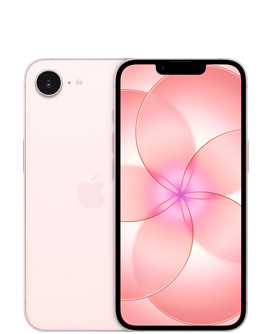
Apple's portfolio of affordable devices has exploded in recent years not only in volume but also in terms of the nebulous "value" metric, targeting nearly every possible cohort of consumers, so much so that now you can get the iPhone 17e, the MacBook Neo, the iPad 11, the Apple Watch SE 3, and the AirPods 4 for roughly the same price as the highest end iPhone 17 Pro Max, with some change to spare.
Apple's ecosystem of affordability has expanded rapidly in recent years, unlocking tremendous value in the process

The 2TB version of Apple's iPhone 17 Pro Max can be purchased for $1,999 in the US right now. In contrast, you can get five budget devices from Apple at around the same total cost: the iPhone 17e ($599), the MacBook Neo ($599), the iPad 11 ($349), the Apple Watch SE 3 ($249), and the AirPods 4 ($129), bringing the total to $1,925.
Do note that Apple announced two of these budget products, the iPhone 17e and the MacBook Neo, just last week. For the benefit of those who might not be aware, the iPhone 17e comes with a notch that houses the Face ID module as well as the selfie camera, a Super Retina XDR OLED screen that is capable of delivering up to 1,200 nits of peak brightness, the A19 chip that sports a 6-core CPU and a 4-core GPU with neural accelerators, and the C1X modem that is up to 2x faster than the C1 found in iPhone 16e.
Also, the MacBook Neo features a 13-inch Liquid Retina display with a 2,408 x 1,506 resolution and 500 nits brightness, uniform bezels, Touch ID, dual-firing speakers that support Spatial Audio, a 1080p front camera, a brightly colored aluminum frame, and a color-matching keyboard. But it does come with some compromises, including just two USB-C ports with wildly different characteristics, the A18 Pro chip, 8GB RAM, and a mechanical trackpad sans pressure-sensing capabilities.
Do note that Apple released the iPad 11 in March 2025, the Apple Watch SE 3 in September 2025, and the AirPods 4 in September 2024. As such, all three of these devices can be purchased via periodic online deals at a substantial discount to their respective list prices, further boosting the attractiveness of Apple's current portfolio of affordable devices.
Apple's portfolio of pricey "Ultra" devices is also set to expand
At the other end of the spectrum, Apple is all set to materially expand its range of ultra-high-end devices. The absolute beast in this category of upcoming "Ultra" products is, of course, the iPhone Fold, which is expected to debut later this year with a price tag north of $2,000, a massive inner display, and a host of new tech, including in-display sensors, COE or Color Filter on Encapsulation, and a modified hinge mechanism that nearly eliminates display crease.
Next up, we have the next-gen AirPods Pro that are rumored to come with a camera to power Siri's Visual Intelligence features and might launch later this year. These AirPods Pro would complete a troika of AI-powered devices from Apple, which include smart glasses and an AI pendant, to take on Meta's early lead with its Ray-Ban smart glasses.
We also have the upcoming high-end MacBook Pro that would sport a touch-enabled OLED screen and entail a price hike of around 20 percent relative to the just-launched M5 Pro and M5 Max MacBook Pro devices. According to Bloomberg's Mark Gurman, Apple might adopt the "Ultra" label for the OLED MacBook.
All in all, Apple appears to be trying to corner nearly every segment of the consumer market by offering something that matches the purchasing power of each strata, positioning itself as the tech medium of choice for the entire globe in the process.


About the author: Writing is my one incontrovertible passion. Over the past six years, he has authored over 2,200 distinct articles on financial and tech-related topics, spanning nearly 1 million words. And he has been a member of Wcctech mobile team since 2025. As an alumnus of the University of Toronto, Rotman Commerce Program, I bring nuance, in-depth knowledge, and a unique perspective to every topic that I cover. When I'm not writing, I'm traveling the world, exploring hidden confectionaries and restaurants as an aspiring food connoisseur.
Follow Wccftech on Google to get more of our news coverage in your feeds.