


Samsung is now reportedly looking to redesign its 6th-generation 1c DRAM to improve yield rates and gain an edge over its upcoming HBM4 process.
Samsung's 1c DRAM Chip Will Be Important For The Firm's HBM4 Process & The Success of Its Memory Business
The Korean giant is now considering revamping its 1c DRAM process, which is said to be a key factor in the success of its HBM4 process. According to a report by ZDNet Korea, Samsung has been evaluating designs for its cutting-edge DRAM processes since H2 2024, and the firm has now redesigned its high-end 1c DRAM to ensure that its upcoming HBM processes see the industry's adoption, unlike the HBM3 derivatives that witnessed massive roadblocks in seeing integration from the likes of NVIDIA.

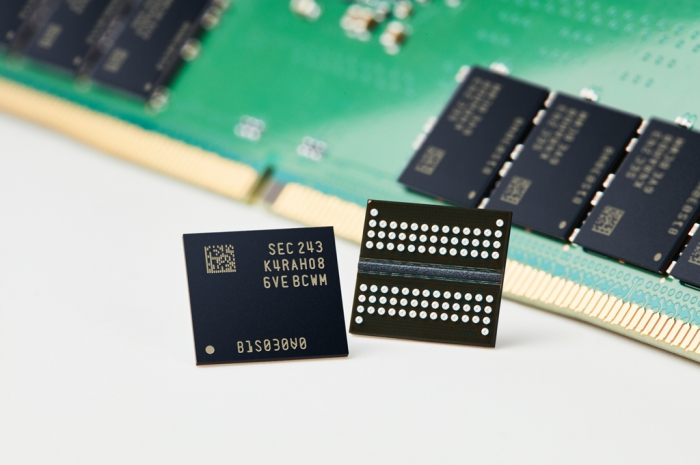
The report states that Samsung's cutting-edge DRAM process didn't achieve the targeted yield rates, which are said to be around 60%-70%, which is why the Korean giant couldn't proceed to the mass production stages. It is claimed that the massive issue lies in the size of the 1c DRAM chip, and Samsung initially was focused on reducing the size to achieve higher production volume, but that meant that the company was compromising on process stability, which resulted in lower yield rates.
Samsung Electronics has changed the design of its 1c DRAM to increase its chip size and is focusing on improving yields, targeting the middle of this year. It appears that they are focused on stable mass production of next-generation memory even if it costs more.
- ZDNet Korea
Samsung's 1c DRAM process plays a crucial part in how the company's HBM4 products turn out. Since competitors like SK Hynix and Micron have already refined their designs, the Korean giant is running out of time. Given the Korean giant's not-very-good reputation in the industry, especially after its HBM3 fiasco, it becomes important for Samsung to ensure that the 1c DRAM process turns out as per industry standards.
For now, there's uncertainty about how Samsung's 6th-generation DRAM process will turn out, but it is claimed that we can see a development in the upcoming months, which could potentially put Samsung's HBM4 process on track for mass production, which is expected by the end of the year.


About the author: Muhammad Zuhair is a hardware and technology reporter for Wccftech, specializing in the semiconductor industry and the complex interplay between technology, manufacturing, and geopolitics. His coverage focuses on the corporate strategies and technological roadmaps of industry giants like TSMC, NVIDIA, Samsung, and Intel. Zuhair's expertise lies in deconstructing complex topics such as fabrication nodes (e.g., 2nm process), the economic impact of policies like the CHIPS Act, and the strategic development of AI infrastructure from NVIDIA, AMD and Intel.
Follow Wccftech on Google to get more of our news coverage in your feeds.


