


When indie developer Supergiant released the first Hades game out of early access in 2020, it was nothing short of a masterpiece. An excellently crafted game that elevated rougelikes by weaving the storytelling and gameplay together in stronger and better ways than we'd previously seen in the genre.
It's a tightly made game, with incredible and twitchy action, a stunning visual language with evocative character and environmental design, and a wonderful score. It's very well written with strong voice performances to match, and above all else, it is an absolute blast. It was my personal pick for GOTY in 2020 and it remains one of the best games I've ever played.
At the time, none of that really surprised me. I've been playing Supergiant-made games since Bastion, and I know this is a studio that absolutely does not miss. I also knew that they had, at that point, never made a sequel to any of their games; they just moved on to a different project. I never yearned for a Hades 2, because I didn't expect it, and I just wanted another Supergiant game, whatever it happened to be.


Which is why I was both shocked and endlessly curious when Hades 2 was initially revealed. It's the first time Supergiant is making a sequel to one of its games, and while the studio has proven to me that they can make a damn good video game at least four times over, a sequel adds a whole new set of expectations and concerns. Concerns that were quickly dashed, and expectations that were greatly surpassed the more I played Hades 2.
Before I continue, I should add a bit of context here. I know Hades 2 launched in early access last year, and that there are already a lot of people who have sunk dozens, if not hundreds, of hours into the early access version. I am not one of those people, for no reason other than the fact that I didn't play the first Hades until its v1.0 launch, so I wanted to have the same experience here. The only difference this time is that I played the first Hades game on my PC, before getting it on Nintendo Switch, whereas for this review, I've been playing Hades 2 on my Nintendo Switch, though I know I'll soon get it on my PC to play it with sharper graphics.
That's all to say that I shielded myself as best I could from any Hades 2 news and updates since May 2024. I'd heard good things from friends of mine who'd jumped into its early access version, but beyond that, I've been scrolling past anything Hades 2-related for more than a year to come to this v1.0 launch as fresh as possible.


So if you find yourself in the same boat as me, let me catch you up on where we find our protagonist, Melinoë, daughter of Hades, Princess of the Underworld, an immortal and extremely powerful witch taught by Hecate herself, at the beginning of the game. Chronos, the Titan of Time and father to the Olympians, has escaped his prison under Tartarus and returned to enact his vengeance on his children who sliced him to bits and scattered him across the Underworld, hoping they'd found a way to keep the deathless titan from coming back, since they couldn't necessarily kill him outright.
Melinoë never knew her father, her mother, or everyone's favourite Prince of the Underworld and her brother, Zagreus. She was still a baby when Chronos first attacked, taking the House of Hades for himself and ensnaring her faMelinoëmily. The all-powerful witch Hecate took her in and trained her from the moment she could walk for a single purpose: to kill Chronos.


So once again, you're moving through the Underworld, though instead of trying to escape it, you're going the opposite way into its depths to find and defeat Chronos, and if you fail, you're sent back to this game's hub world, the Crossroads, a realm in between the Underworld and the Earth's surface. While there, you can unlock permanent upgrades with the resources you've acquired while out on a run, speak to various characters who will each deliver more of the game's narrative as you talk to them in between attempts, and practice with each weapon as you unlock the different Nocturnal Arms.
If you played Hades, then it's all old hat to you, as it was to me. But it's not just everything that was there before with a new coat of witchy paint, like how you unlock upgrades and progress key moments of the narrative by using the big caldron in the middle of the Crossroads and chanting a spell. What I quickly discovered was the running theme for Hades 2 compared to Hades 1: there is so much more to do and delve into.
First off, before even getting into how the build crafting that's possible in Hades 2 is far deeper than what it was in Hades 1, you don't have only one path when you go out on runs. Your main goal when you start the game is to head down into the Underworld and defeat Chronos, but you soon learn that the Olympians need help on Mount Olympus, and after a few runs, you discover the resources necessary to go up, towards Mount Olympus, instead of down into the Underworld.

You'll fight through four sections in the Underworld and four on your way to the top of Mount Olympus, making Hades 2 bigger than the first game just based on the number of areas you fight through. The areas also do more with the space, like how the Fields of Mourning are wide open spaces instead of a constant stream of close-quarters rooms, an element that the area boss also takes advantage of.
Also, I'd be remiss if I didn't mention that the boss fights in Hades 2 overall outshine the fights in Hades 1. They're still challenging skill checks that can send you back to the Crossroads before you know what happened, but the challenge ramp between them is paced out more thoughtfully and the design of the fights help encourage you to take advantage of all the new options you have in combat.
Regarding the rest of the combat, there's a solid amount of enemy variety, with only a few that feel exactly the same to fight compared to Hades 1. What's more interesting than their variety, though, is how Hades 2 pushes the combat into a slightly slower, more methodical direction. In Hades 1, you're constantly moving to avoid enemy attacks, while getting in your hits while you can. The same is true in Hades 2, but you have greater potential to combo your attacks, without the presence of boons, even, to deal huge amounts of damage.

Melinoë can cast a large circle around her that deals damage to enemies caught inside it and even traps them or slows them down, meaning you can catch an enemy chasing you while you then charge up a stronger attack to combo with your cast and hit multiple enemies at a time. You also have a mana bar on top of your health bar, which charts how much magic you have available to perform your cast, or a charged-up version of your main attack and/or special attack.
Melinoë's movement is also significantly shifted, because you no longer have to mash the dash button. She sprints when you hold it down, which seems like a small shift in the grand scheme of things but makes a massive difference compared to the first game and is a meaningful change that makes the combat in Hades 2 feel different while remaining familiar.
All of your six Nocturnal Arms weapons have non-charged and charged versions of your main attack and special attack, and you can cast your entrapment circle no matter which you're using. Of course, not all of them will be to everyone's tastes, but they're all viable in their own way. I'm personally partial to the Sister Blades, the Moonstone Axe and the Witch's Staff, in part because they are the ones I've spent the most time with, and I've found Aspect variations for each of them that I particularly enjoy.

Build crafting in Hades 2 goes far deeper than unlocking Aspects and levelling up your weapons, though. Of course, there are your boons that you'll acquire while you're out on runs, meeting new Olympians, and seeing design revisions of ones we were already familiar with in the first game. But your Arcana Cards and Animal Familiars, on top of the Keepsakes system from the first game, are significant and intuitive ways that let you shape your build and your run chances before you take your first steps on the path towards Tartarus or Mount Olympus.
Once you do take those steps, there are new Olympians you'll meet like Hestia, Goddess of the Hearth and my favourite symbol to see appear on a run, thanks to all of her boons being extremely useful for my preferred playstyle.

There are also new characters to meet in the middle of runs that grant you their own upgrades or boons, with a personal favourite being Arachne because she'll weave you a dress of armour that can make all the difference in a run, especially with her keepsake equipped.
Your Lunar boons (also called your Hex), granted by the Moon herself, are also one of my favourite changes to the boon system, with all of your strongest special abilities coming from her boons and opening up more space for boons from other characters you meet. Once you choose an ability, every time you meet her again on your path, you can upgrade it via a small skill tree that boosts it in different ways, depending on what you choose to unlock. It's another meaningful improvement on how your strongest attacks in the game work compared to Hades 1.


Frankly, I'm feeling hesitant to say too much because so much of the fun in rougelikes is discovering all of these new intricacies along the way for yourself, so I'll leave off by emphasizing that even after felling Chronos and reaching the peak of Olympus, when I thought I'd seen most of what the combat system and build crafting had to offer, there was still so much more to delve into.
It's astounding at the levels of depth available here for players who want to get into every nook and cranny of this game's combat, and what makes it all shine is how well executed and thought out it is, to go along with what I felt to be a much better-paced challenge ramp compared to Hades 1.
Moving away from the combat and to the story, again, I'm hesitant to really say anything because the fun is in the discovery, but I will say there are more surprises in Hades 2 than in Hades 1. Like who you meet when you get to the top of Olympus, which I won't spoil here. What I can say is that the voice acting and writing quality have remained at the same high level found in Hades, with Melinoë being a charming protagonist, even if she's a little more serious and less fast-and-loose compared to how Zagreus carried himself.


I also have to call out the score, because it's once again a soundtrack that I know I will be listening to, as I have not stopped listening to the Hades 1 soundtrack since it became available. Darren Korb knocked it out of the park again.
Visually, I'm happy to say that, as someone who didn't buy a Nintendo Switch 2 for what I personally believe to be an exorbitant amount of money, Hades 2 looks and runs great on my OG Nintendo Switch and Switch Lite. I went back and forth between the two, playing in my preferred handheld mode over docking it on my TV, and it honestly made my Switch feel new again; it looked that good.
The painterly art style still pops, even at 720p, and it's a smooth 60 FPS the entire time. Sure, it'll look better on a Switch 2, and even better on a PC, but if all you have is your eight-year-old Nintendo Switch to play Hades 2 on, you can grab it with the confidence that it'll still be a good experience.
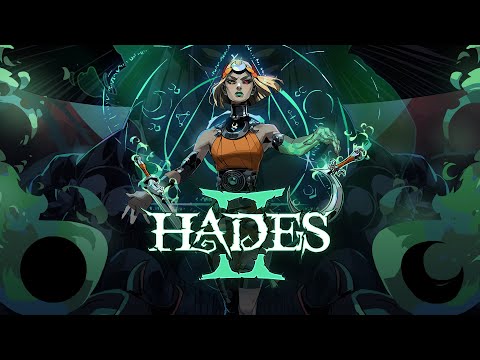
Overall, I really can't recommend Hades 2 enough. I already loved the first game, and went into this sequel curious as to what Supergiant making a sequel would look like. Now, I really don't want to be doing anything else other than playing Hades 2. I'd rather be playing Hades 2 than writing this sentence right now.
Supergiant doesn't miss, even when it comes to sequels. While Melinoë looks to the Moon and her light for guidance, I'll be looking towards Supergiant to guide me to whatever they do next.
Nintendo Switch version tested. Review code provided by the publisher.


About the author: David has been writing about videogames, technology, and culture since 2020, with a focus on reporting daily news across multiple publications, including GameDaily.Biz, GameSkinny, and PlayStation Universe before joining Wccftech in 2025. David started contributing as Canada/US reporter for Wccftech's gaming section in 2025. Besides being up-to-date on the industry's movements, he loves interviewing developers, reviewing games, and writing intricate essays about the symbolism and layered meanings to be found in rich narratives as he's done for publications like GamesIndustry.Biz, LostInCult, and others. Outside of games he loves movies, music, theatre, his hometown, and his family, though not necessarily in that order.
Follow Wccftech on Google to get more of our news coverage in your feeds.


