


It seems that Intel Foundry has indeed found its "iPhone moment" with the 18A process, as reports now indicate that the node has received massive interest from tech giants.
Intel's 18A Process Could Prove To Be a Significant Breakthrough For the Foundry Division; Many Tech Giants Now Showing Interest
Intel's chip business is in desperate pursuit of a breakthrough, not just for financial reasons, but it needs to take away the spotlight from TSMC to get attention, especially in the US. The scale has tipped massively towards TSMC after its deal with US President Donald Trump, and many clients are now seeing TSMC's US facilities as a viable alternative to Taiwan. Intel's answer to the situation is likely the 18A node, as according to the Korean media outlet ChosunBiz, Team Blue is in talks with NVIDIA, Microsoft, and Google regarding its 18A process, which could prove to be a great alternative to TSMC's N2 process.
Team Blue did set the stage for the 18A node when it showcased it at the recent Direct Connect 2025, saying it is the "most advanced process manufactured in the US". Earlier claims have shown that 18A is said to be a direct rival to TSMC's N2 process, coming in with similar SRAM density and performance/efficiency figures. Generationally, 18A is said to show much more superiority than the Intel 3 node, so it is safe to say that Team Blue has managed to create a "wonder" here, and this is reflected in the clientele's sentiment towards the process.

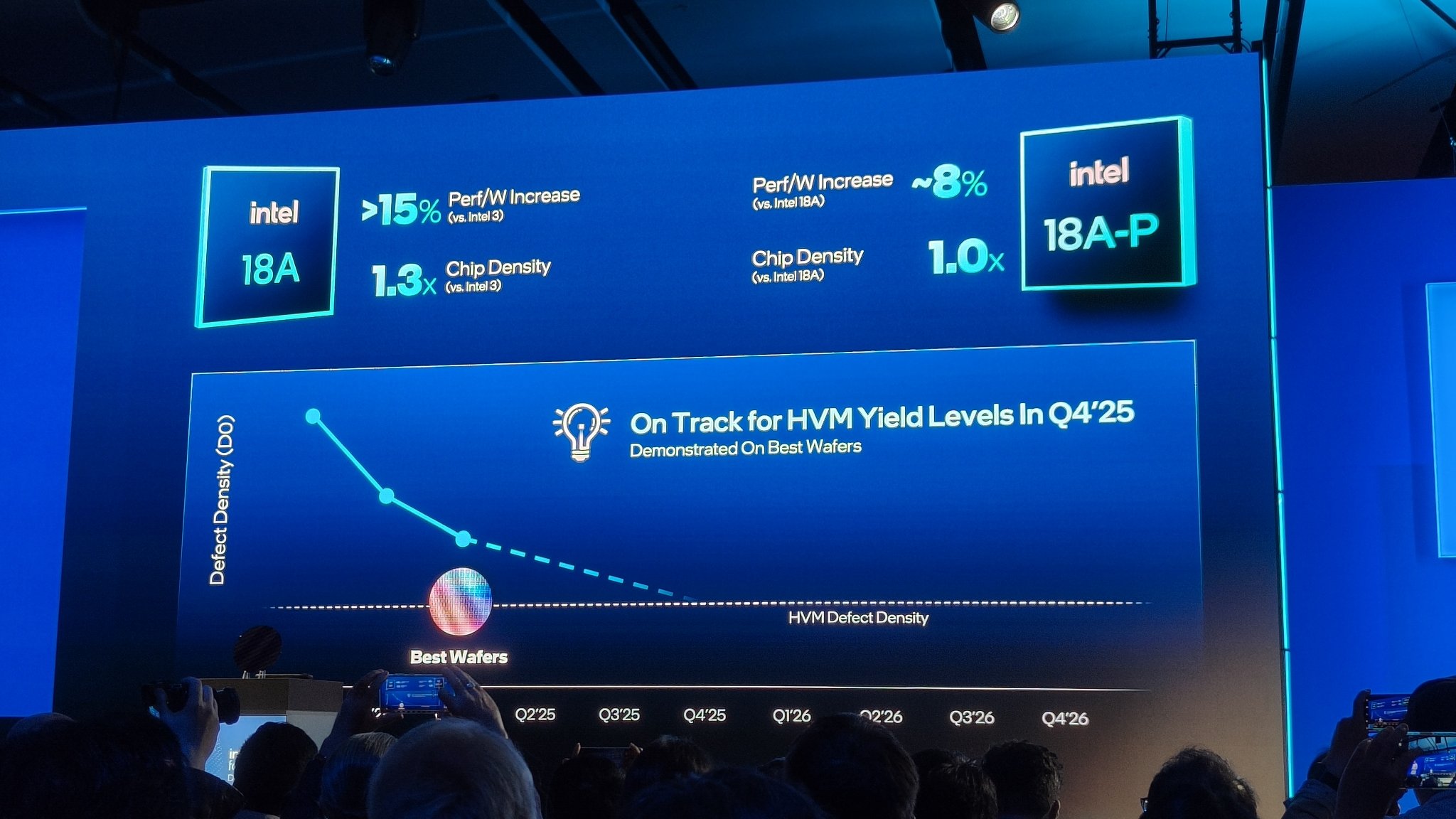
The report claims that a huge portion of interest towards the 18A process comes with the change of leadership structure at Intel, especially with the appointment of the new CEO, Lip-Bu Tan. It is said that under his vision, Team Blue will see a key focus on semiconductor design automation (EDA), packaging, and foundry. And with Tan potentially ditching the "IDM 2.0" strategy, we could see Intel gaining traction in its consumer business as well, particularly with its CPU offerings.
One of the other reasons behind the interest in 18A is that TSMC's production lines are too populated for now, which has forced other firms to look into alternatives. For now, Intel seems to be in a strong position to act as a counterpart to TSMC's 2nm node, and while firms like Samsung Foundry are in the race, they are yet to gain the edge.


About the author: Muhammad Zuhair is a hardware and technology reporter for Wccftech, specializing in the semiconductor industry and the complex interplay between technology, manufacturing, and geopolitics. His coverage focuses on the corporate strategies and technological roadmaps of industry giants like TSMC, NVIDIA, Samsung, and Intel. Zuhair's expertise lies in deconstructing complex topics such as fabrication nodes (e.g., 2nm process), the economic impact of policies like the CHIPS Act, and the strategic development of AI infrastructure from NVIDIA, AMD and Intel.
Follow Wccftech on Google to get more of our news coverage in your feeds.


