


Robots have traditionally been preprogrammed machines that carry out strictly the instructions given to them. However, that seems about to change with the launch of Gemini Robotics 1.5 and Gemini Robotics-ER 1.5. Google DeepMind seems to be taking the leap and pushing for a new era by working on more adaptive robots that can reason, learn, and even solve real-world problems.
Google DeepMind's new AI models are meant to bring smarter and more adaptive robots
Tech giants are constantly exploring the potential of technology by bringing in more advanced AI models and solutions. While robots have had limited application in terms of performing repetitive tasks under controlled situations, such as moving boxes or assembling car parts, Google DeepMind is determined to equip its latest models to handle complex tasks or even look up information online if there is a need.
During a recent update on its robotic direction, Google introduced two new AI models, Gemini Robotics 1.5 and Gemini Robotics-ER 1.5. The ER model is meant to focus on reasoning and breaking down tasks by finding more information from the web, while the robotics model is meant to carry out actions. Carolina Parada, the lead robotics head at Google DeepMind, detailed this approach and explained how, due to this pairing, the robots are able to think multiple steps ahead and not focus on single steps alone.
So now, with the updated Gemini Robotics models, you could get help with loading suitcases for vacations, as well as get assistance with packing choices, checking the weather, and basically planning the trip better. Since two-model systems are at work, it allows for a human way of operating that first plans and then acts. The major upgrade is that knowledge transfer, meaning skills developed on one robot, can be transferred to another, even if it is built or designed differently.
The implications of this new Gemini-powered robot can be huge, especially in the healthcare sector, where assistive robots can help according to different patient needs. Even for personal use, it can end up being a useful assistant. However, with technological leaps, challenges remain, especially with AI models rapidly progressing, which would not be free from complications either. Data privacy, reliability, and safety questions arise, so Google would need to rigorously conduct tests before enabling large-scale deployment.
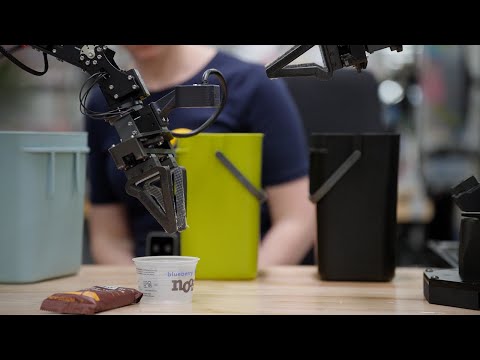
One thing is certain: Google DeepMind is determined to transform robots from tools into assistants that can work alongside humans by teaching them how to think and act.
Follow Wccftech on Google to get more of our news coverage in your feeds.


