Diablo IV: Lord of Hatred lands almost three years after the launch of the base game. As you may recall, Blizzard initially committed to annual expansions, which they almost accomplished with the first one, Vessel of Hatred, launched sixteen months after Diablo IV.
However, it later became clear that delivering high-quality expansions on an annual basis was impossible, especially as the developers were also busy with making seasonal content. Thus, Lord of Hatred launches a year and a half after the previous expansion, which seems to be the sweet spot in terms of development time.
Ultimately, though, what matters is the product's quality. Vessel of Hatred almost, but not quite, delivered on that front; while its brand-new Spiritborn class was extremely well-received, the same cannot be said about its story, which felt like the weak middle link in a trilogy. After spending a couple of dozen hours in the review server for press and content creators, I'm happy to say that Lord of Hatred is on a whole other level in this respect and may even surpass the base game's own narrative.
- A New Narrative Benchmark for the Series
- Two New Classes and a Revamped Arsenal
- A Structure for the Endgame, But No Incentive to Play Co-op

A New Narrative Benchmark for the Series
From the get-go, Blizzard's writing team doesn't pull any punches and never truly takes the proverbial foot off the gas. The pace is excellent, the plot is full of twists and returning characters, and, most importantly, the story delivers a satisfying conclusion to the narrative saga of Mephisto, the titular Lord of Hatred. The official review guidelines forbid me from going into spoiler territory, but I wouldn't have wanted to do that regardless: some of the key moments will undoubtedly be etched in the memories of Diablo fans for a long time, punctuated by great music and cinematics as usual for a Blizzard game. In fact, this may be the best story ever narrated in the whole series, when all is said and done. It even made me yearn for a live action adaptation, wondering about the potential for an HBO-style TV series based on the dark fantasy world of Sanctuary, forever stuck between the High Heavens and the Burning Hells.
The setting of Lord of Hatred is also particularly meaningful. This is the first time Diablo players can actually explore the Skovos Isles, an archipelago that was also the site of the first Nephalem civilization in Sanctuary. The creators of Sanctuary and the Nephalem (and, therefore, humankind), Inarius and Lilith, spent a lot of time there, and so did their son, Rathma, making it the perfect choice for the kind of story that the developers wanted to tell. Beyond the narrative implications, the Skovos Isles also look great aesthetically, with bright colors and ancient structures that reminded me of Greece. Personally, I much prefer Skovos over Vessel of Hatred's jungle environments of Nahantu, but your mileage may vary there.

Two New Classes and a Revamped Arsenal
Of course, not every Diablo player places much importance on the story; many are into the franchise mainly for its hack-and-slash gameplay. For them, Blizzard is introducing two classes with this expansion, a first since Diablo II's Lord of Destruction (which added the Assassin and Druid). Lord of Hatred adds the Paladin and Warlock, although the Paladin has been playable for pre-order customers since the expansion was first unveiled at The Game Awards 2025.
Between that fact and my own unusual failure to connect with Diablo IV's Paladin class (which I generally love in most games), I picked the Warlock to play Lord of Hatred during the review period. Even in this area, I enjoyed this second expansion more than the first. While the Spiritborn was undoubtedly appealing on paper, I found it too complex due to its four-pronged design based on the Spirit Guardians. The Warlock, on the other hand, is pure, destructive fun, no matter how you tailor it for yourself.
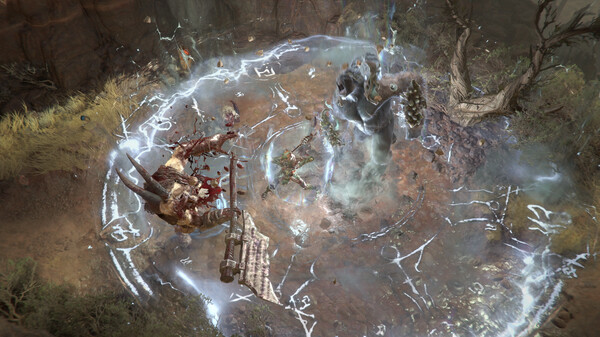
I've never been a big fan of pets and minions. Thus, even in this case, I went with a build that almost exclusively focuses on powerful area-of-effect spells. I picked Molten Bomb as a Basic Skill, upgrading it to spawn a turret that spits more volative lava after the initial lob; Hell Fracture and Dread Claws to deal massive AoE damage; Umbral Chain to slow down enemies while dealing damage over time; Profane Sentinel, the build's only summon, because it makes enemies vulnerable (in addition to the beam's damage); and finally, the Ultimate Skill Apocalypse, a Sigil that detonates after a delay, inflicting severe damage.
This will likely be a niche build, as evidenced by the fact that neither of the Warlock's four Soul Shards (class-specific archetypes that unlock an active demon summoning skill and passive bonuses) is really suited to it. However, it's a testament to the design team that even a sub-optimal build crafted without too much planning can still be fun in a casual way.
There's much more in Lord of Hatred beyond just two new classes, though. Early in the story, you unlock a Talisman item that is effectively a dedicated slot that carries Charms, which return from Diablo II (without taking up bag space, unlike in the classic game). Each Charm contributes individual effects, and accumulating enough Charms from the same set triggers potentially build-defining set bonuses.
The expansion also goes live with the long-awaited skill tree overhaul. The base overhaul featuring over 40 reworked choices and over 80 additional options will actually be available to all Diablo IV players for free. Lord of Hatred owners additionally get more than 20 exclusive transformative skill variants per class, which add a third "C" path to existing A/B skill branches, pushing abilities into fundamentally different territory. While I didn't really have time to check all the changes made to the other classes (the review server was only live for a week), the Warlock's skill tree already showed me that this is a net positive when it comes to increasing build variety.
Lastly when it comes to itemization, the Horadric Cube also returns from Diablo II, albeit as a dedicated crafting station. The idea is that you can put existing items you're not satisfied with into the Cube and potentially get better items. A list of recipes governs the different crafting outcomes; for example, combining three copies of the same Unique item produces a new, different Unique.
Lower-rarity items (common, magic, rare), which are usually just salvaged or even dropped by players, are given potential endgame relevance with the Cube, because they can be combined with ingredients to push them all the way up to Legendary status. To support this, Blizzard has returned lower-tier items to endgame drop pools, albeit with a key change: any item can now roll a greater affix, a modifier previously exclusive to Legendaries. This gives the Cube raw material worth using. Additionally, Tuning Prisms are a new ingredient for the Horadric Cube that lets players target specific affix categories on their gear, replacing the current system where affix rolls at the Occultist are entirely RNG-dependent.

A Structure for the Endgame, But No Incentive to Play Co-op
For endgame users, the big highlight of Diablo IV: Lord of Hatred is the addition of War Plans, which are unlocked right at the end of the campaign. This new system lets you select which activities you want to pursue next in a specific sequence, starting from just 2 at the beginning and up to 5 activities, including Nightmare Dungeons, Helltides, The Pit, Lair Bosses, Kurast Undercity, Infernal Hordes, and the Tree of Whispers.
Each activity on the War Plan board comes with a randomized bonus reward modifier attached to it, and each completed activity yields its standard loot plus the War Plan bonus. After finishing all the activities you've selected, you receive a final completion reward and earn progression points. But there's also an entirely other side to the system: a separate skill tree for each endgame activity. Completing activities through War Plans feeds experience into the corresponding tree, which lets you permanently modify how that content behaves, including changing enemy spawns, resource drops, difficulty scaling, and more. It's an ingenious system, to be honest, because it provides much-needed structure to Diablo IV's endgame without restricting the usual freeform approach that players have had to get used to when farming.
Finally, the Loot Filter, accessible to all Diablo IV players regardless of whether they have purchased the expansion, is extremely helpful to avoid wasting time sorting through items that you don't really need. Admittedly, it came a bit late in the game's life cycle, but as they say, better late than never.

After a lot of praise, I do have a critique to levy against Lord of Hatred: it lacks any incentive to group up with other players, unlike Vessel of Hatred, which added the Dark Citadel three-wing endgame dungeon. It may not apply to most Diablo IV fans, but I think the game would be a lot more fun (not to mention keeping players interested for longer) if it did a better job at supporting and incentivizing cooperative gameplay. As it is, there's little to no reason to do so, which kind of devalues the whole point of having a shared world, which was one of the base game's main attractions with its dynamic events. Hopefully, that will change in the future, but after three years, it's likely Blizzard has settled on a certain type of audience that favors solo play.
For more about the studio's own thoughts on the expansion, check out a developer interview available at this link.
Reviewed on PC (access provided by the publisher).


About the author: With over two decades of experience in gaming journalism, Alessio Palumbo has led the gaming vertical at Wccftech since August 2015. He started working at a young age for Italian websites like Everyeye.it, Gamestar.it, Nextgame.it, and Multiplayer.it before kickstarting the indie English-language publication Worlds Factory as its founder and Editor in Chief. In the last decade, he has coordinated the overall output of Wccftech's gaming section, managed PR relations, assigned reviews, produced daily news coverage, edited gaming content as needed, and delivered game reviews. Arguably, his trademark content is the long series of exclusive developer interviews that have been cited by Wikipedia and by the biggest news media and gaming publications. His passion for technology also makes him knowledgeable when it comes to gaming hardware and tech. His favorite genres include RPGs, MMORPGs, and action/adventure games.
Follow Wccftech on Google to get more of our news coverage in your feeds.